
Ormsby Wilkins
ABT’s celebrated music director takes his final bow. (Well, sort of).

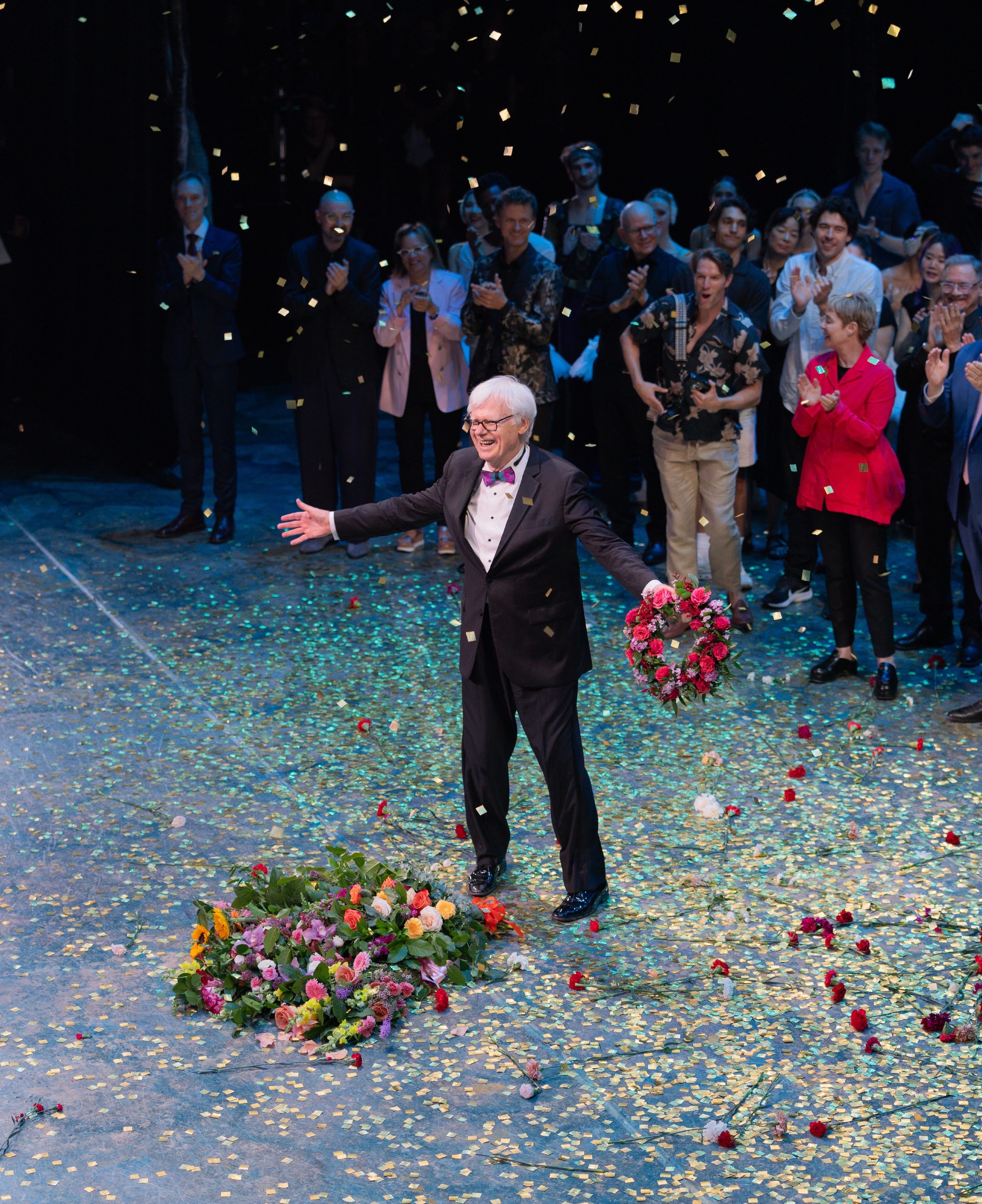
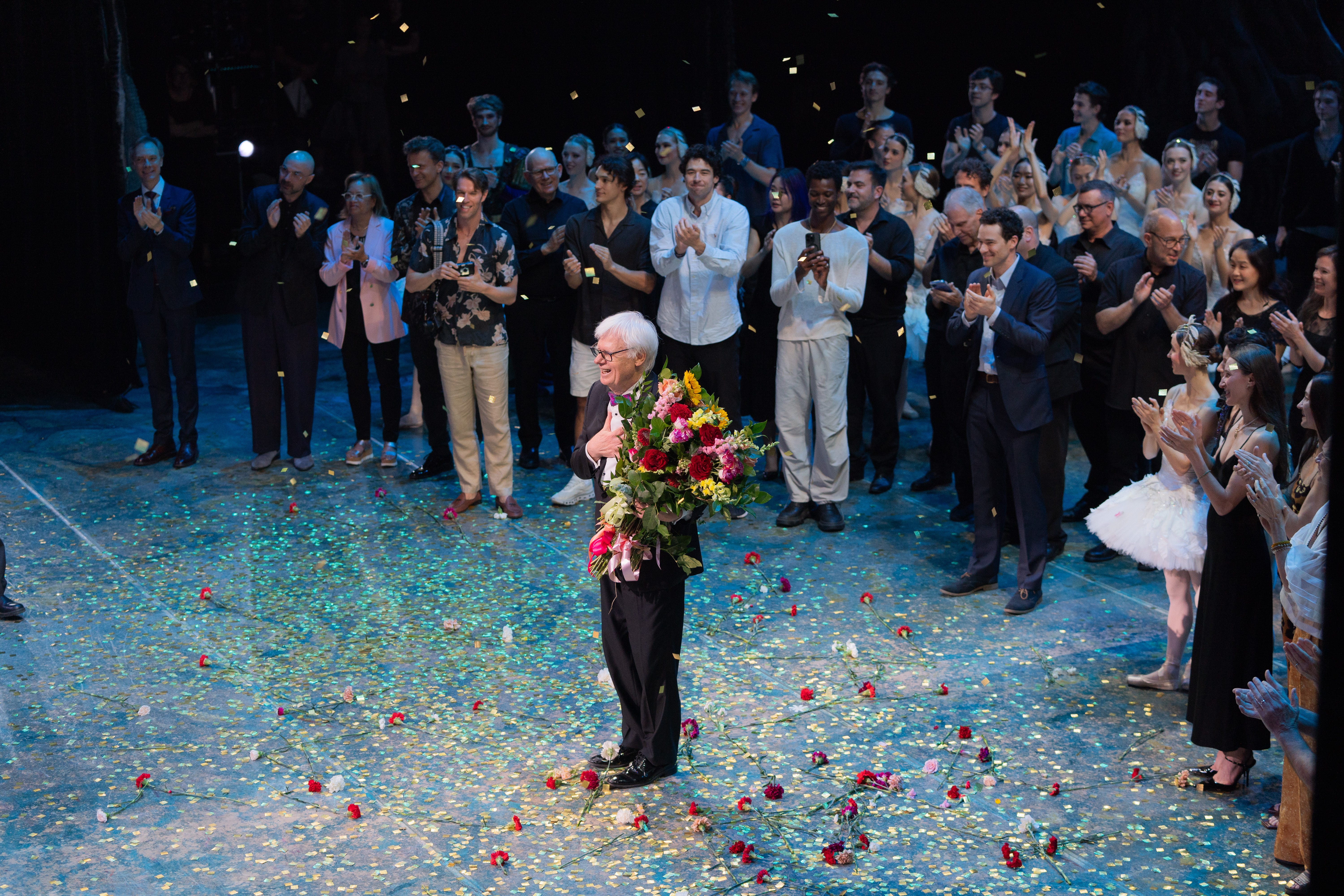
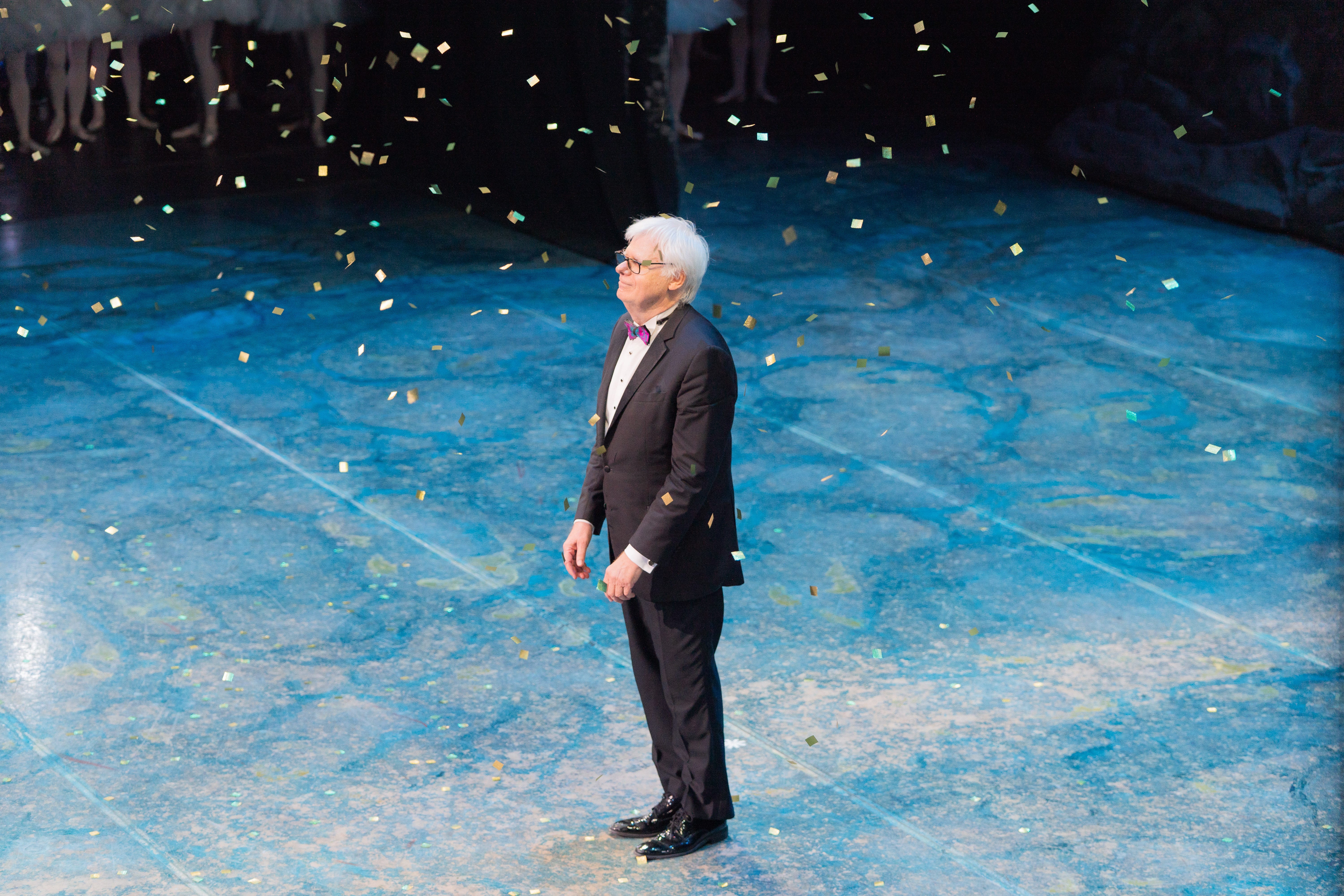
This summer was a season of change at American Ballet Theatre, starting with Cory Stearns’s retirement and continuing with the promotions of Jake Roxander, SunMi Park, and Jarod Curley to principal dancer and soloist promotions for Zimmi Coker, Michael de la Nuez, Tyler Maloney, Joseph Markey, Andrew Robare, and Yoon Jung Seo. The closing weekend of the season brought the most transformational change of all—the final performance conducted by Music Director Ormsby Wilkins, who retired after 21 years in that role.
The Australian-born Wilkins started as a guest conductor with ABT in 2000, following an esteemed international career spanning the Australian Ballet, Sadler’s Wells Royal Ballet (now Birmingham Royal Ballet), and 16 years as music director of the National Ballet of Canada. Warm, genial, and enthusiastic, Wilkins helped create a welcoming atmosphere in the theater. His love for the music, and his respect for the orchestra’s musicians, were infectious—under Wilkins, the orchestra was as much a part of a performance as the dancers. His successor, David LaMarche, will surely carry that forward.
Wilkins may have stepped down from his epic leadership responsibilities at ABT, but he isn’t retiring from conducting. After a few months of traveling, he’ll be back on the podium for Pittsburgh Ballet Theatre, National Ballet of Canada’s 75th-anniversary season, and Sarasota Ballet. We spoke over Zoom a few days after his July 17 farewell performance—and if he retires again, perhaps we’ll talk again.
Follow @abtofficial and @claudiabauer101 on Instagram. For information about American Ballet Theatre, visit ABT.org.
Claudia Bauer: What did your final performance feel like?
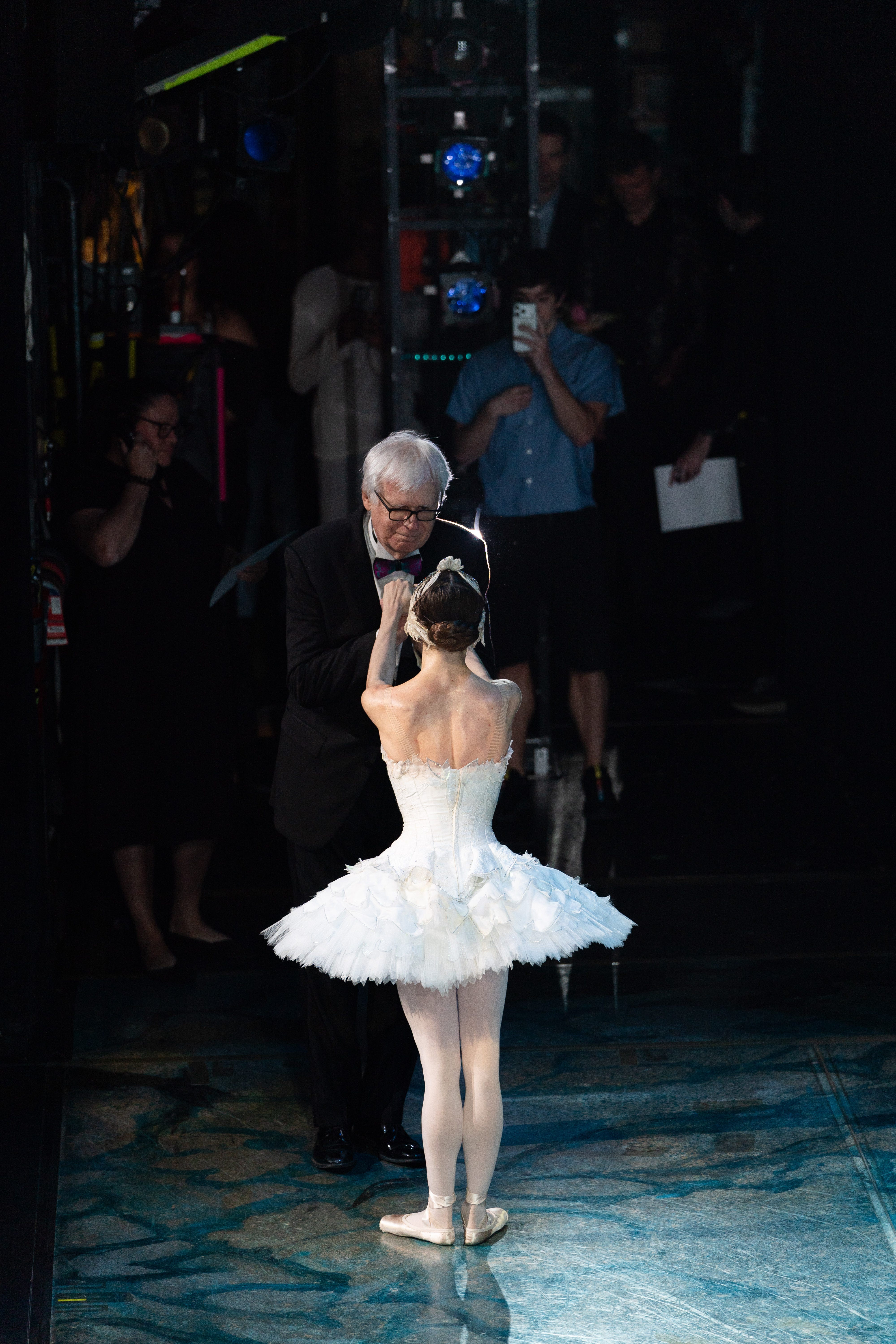
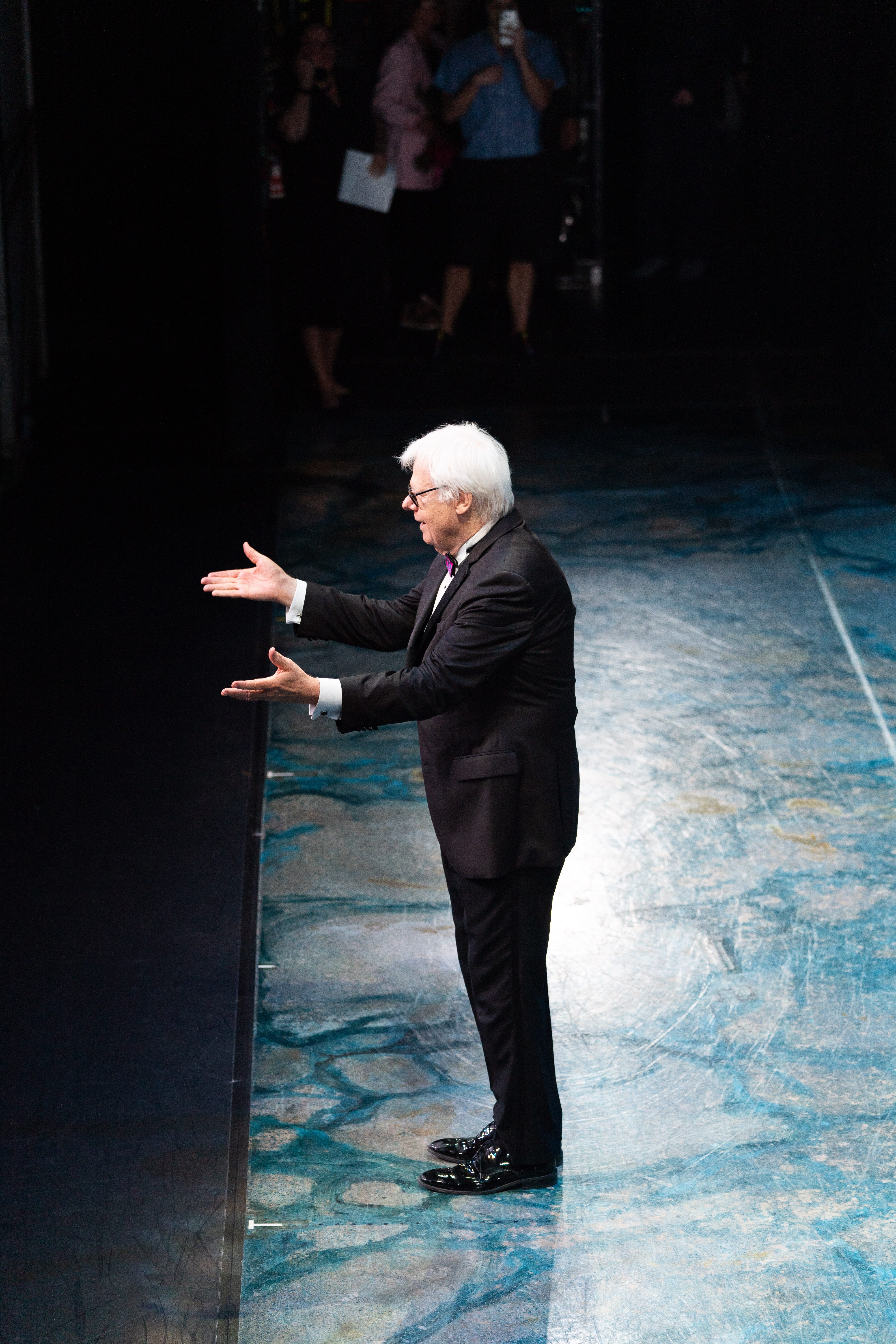
Ormsby Wilkins: It was very overwhelming. I knew that there was going to be some sort of onstage recognition for me, but there was more to it than I expected. All the company members coming on, the principals coming on, and being able to hug them, and I had some family there. And the audience was really amazing. It’s hard to describe the feeling, but it was very gratifying. I felt just so, so happy about how it all finished.
CB: Did it make you feel like you were appreciated in ways that you weren’t aware of during your career?
OW: I think so. I mean, I think I have enough self-regard to think I do a pretty decent job. I don’t expect people to tell me all the time whether things are great or not. But I guess that sort of evening, when there seemed to be so much goodwill and warmth coming from the company and the audience—it did make me feel that [ABT] has been so defining for me that it’s the pinnacle of my career. I’m struggling for words, but it did really validate what you hope you’ve given the company, and they give back. You know, that’s the whole thing—we’re there as a collaboration. And I feel so passionate about this work. I could never have imagined, when I started as a pianist, that I would ever get to New York, and at this level. I feel very comfortable with where I finished up and how it’s gone.
CB: When you look back over your career, what accomplishments are you most proud of?
OW: Being able to be the music director of arguably the greatest classical company in the world—there are many great classical companies, but it’s certainly at the top echelon. To make it there is certainly, as I said, the high point of my career. But I’ve had really wonderful times in the other companies I’ve been at. The National Ballet [of Canada], I was music director there for 16 years, which was fantastic. The journey has been just incredible. I was very fortunate with where I started out, when I joined the Australian Ballet. The music director was John Lanchbery, and I learnt a huge amount from him. I could never have got to where I am without taking on board so much of what he taught me.
CB: Are there specific things that you learned from John Lanchbery that stick out in your mind?
OW: The most the most valuable thing was [to] always understand that even though we are here to accompany the dancers, the music is equally important. He had this incredible knack of being able to combine the two to make the musical performance exciting and of value in itself, rather than just accompanying the dancers. That’s a very important thing—he always said tempi are really important, but you cannot lose sight of the musicians in front of you. You have to somehow involve them in the performance as well.
CB: The ABT audience truly appreciates the orchestra. And yet even though we hear you, we don’t really see you. You’re sort of a mysterious entity that can disappear in the audience landscape.
OW: You know, I had an ambition to be a concert pianist, like a lot of pianists going into their teens. But I realized that wasn’t going to be for me. Whether I was musically or technically good enough was not why I didn’t pursue it. When I got into ballet, and then when I started conducting, I realized I was happy not to be noticed in a direct sense, that the focus was not on me. I feel really comfortable that way. I’ve done symphony concerts, things like that, but I never feel as comfortable as I do being in the pit. The focus of the audience is the dance, and I’m happy just to be there to make the music.
CB: Yeah, an orchestral conductor is one of the performers in the spotlight, which is a really different experience.
OW: Yes. I never thought I could be a conductor, initially. As I said, I started out as a pianist. I used to go with a friend in Sydney to the symphony concerts, and we couldn’t afford anything other than the cheaper seats, which happened to be behind the orchestra. So I was always focused on what the conductor was doing. It fascinated me so much, but I was still going to be a pianist—that’s what I wanted to be. But then almost by luck, I fell into this job as an accompanist for the Australian Ballet. A friend of mine got a job there and I said, “I’m looking for a job, just to have a gap year.” He said, “Why don’t you come and audition for the music director, John Lanchbery, and see what happens?” That’s how I got the job. I thought, well, I’ll do this for two or three years.
I had a sit-down with Lanchbery and I said, “Do you think that conducting is something I might be able to do?” And he said, “Yeah, let’s try it.” When I was a pianist in the company, it took me a while, but I realized that I did have an understanding of how dance and music fit together, how to read dancers, and tempo and phrasing—give a little time here, a little time there. It’s much more subtle than just whether it’s too fast or too slow. I seem to sort of have that ability, and I took that into the conducting profession.
CB: “I’ll do this for a year or two”—famous last words, right? Next thing you know, it’s 40 years later.
OW: Yes, exactly. I look back on how I got here, and I feel I had a lot of serendipity in my life. Just being in the right place at the right time. I’ve had a good share of that.
CB: When you became ABT’s music director, were there things that you wanted to change, or was it pretty perfect when you started?
OW: I don’t think the orchestra would ever claim perfection. I think I wanted to bring, perhaps—how can I put this?—what I felt was energy to the musical performance. Not that the orchestra didn’t play really well, but I wanted to make it a little bit different from others in terms of really thinking about the theatrical side of it, about giving more weight to the performance. Make the orchestra really pop out of the pit. The [Metropolitan Opera House] is a huge house, and it’s a difficult house to judge from an acoustic point of view. Balance is hugely important. You don’t necessarily want the brass to be too big—we have a slightly smaller string section, say, than the opera, so how do we make that balance work better, but still give great energy and make the music really come out to everyone in the house? And it changes the acoustics when you have no one in [the seats] and when you have nearly 4,000 people in there. So that was always in my thoughts, how to create more sound and [bring] more relevance to the music somehow.
CB: The orchestra and the dancers are in a kind of partnership, and I imagine there’s a lot of communication back and forth to make it go. But musicians aren’t dancers, and dancers aren’t musicians. Are there things that you wish each side knew more about the other?
OW: There is just the nature of the fact that [the dancers are] up there and the orchestra’s down in the pit, and we’re on different levels in the theater. But a lot of the orchestra can actually see what’s going on. They take little glances when they when they can. This orchestra has wonderful desire to, and get a lot of pleasure out of, playing for the dancers. They want to give absolutely their best, and they’re so flexible. It’s amazing how good they are, in terms of being able to deal with three very different conductors [Wilkins, Charles Barker, and David LaMarche, Wilkins’s successor]—we all have different ways of doing things—and all the different casts.
Sometimes when we’re asked to do certain things that seem a little awkward for us, our job is to try and explain why we think it should be one way and not another, or at least that there needs to be a bit more flexibility from [the dancers]. And I think most dancers understand that. The dancers are very interested in the music, but of course their focus is so much on their physicality and how they’re trying to present their artistry. I don’t expect them to know everything about music, but obviously musicality is incredibly important, and our job is to try and assist them. Some dancers have musicality more naturally than others, and some phrase differently musically. That’s what you have to understand as a conductor—that musicality is a very fluid thing.
CB: Sometimes, as I’m sure you’ve experienced many times, the dancing and the music come together in some magical way, and it’s a transformative experience. Could you talk about a couple of your favorite ballets to conduct, or your favorite performances?
OW: One I’ve talked about before, and it only happened last year, was Gillian Murphy’s final performance. Of course, I’d been conducting for conducting for Gillian for many, many years. I will never forget the extraordinary [final] performance she gave, and it was so energizing for me and the orchestra. [The musicians] knew things were going incredibly well, and it was so exciting and so fulfilling, that performance. I remember a particularly wonderful Onegin with Diana Vishneva, and Karen Kain from National Ballet [of Canada] was an absolutely fantastic, wonderful ballerina who I worked with a lot. Those performances will always remain in my memory.
As far as pieces, I love the Tchaikovsky ballets, of course, and they’re the bread and butter. I always enjoy doing them and they’re magnificent works, but probably the two pieces that have given me the most pleasure musically are Firebird, of Stravinsky [1910], and Daphnis and Chloë, of Ravel [1912]. Daphnis is sort of forgotten about—there are productions, but it’s nearly an hour long, and it’s a hard score to choreograph to, maybe. But it is the most unbelievable score. It got a little overshadowed because it was written right around the time of [Stravinsky’s 1913] Rite of Spring, and from a theatrical point of view, it didn’t really register that that much. I feel privileged to have conducted the complete Daphnis because it is often done in suites, but it’s not often done complete. Being able to do the complete ballet was amazing.
CB: So in that regard, you’ve had experiences as a ballet conductor that you maybe wouldn’t have had as an orchestral conductor.
OW: Absolutely. Fancy Free has fantastic, wonderful score, and Rodeo by Aaron Copland. I mean, so many composers that, if I my career had gone in another direction, I wouldn’t necessarily have done. It’s a fabulous repertoire. In many ways, I think it’s almost wider than the operatic repertoire. The extraordinary range of music that we cover is amazing.
CB: And new music also.
OW: And new music too. I know that [Artistic Director] Susan [Jaffe] knows it’s important to commission new scores. I think it’s always important to try and commission. We’ve had several over the years, but I think the more that we can commission composers is better.
CB: Any advice for your successor, as you literally hand over the baton?
OW: I wouldn’t presume to give advice to David LaMarche! [Laughter.] It’s funny, because we’ve had similar paths to where we are. He also played a lot in the studio and has tremendous experience. The musical side is in good hands.
For information about American Ballet Theatre’s Fall 2026 and Spring 2027 seasons, visit ABT.org.