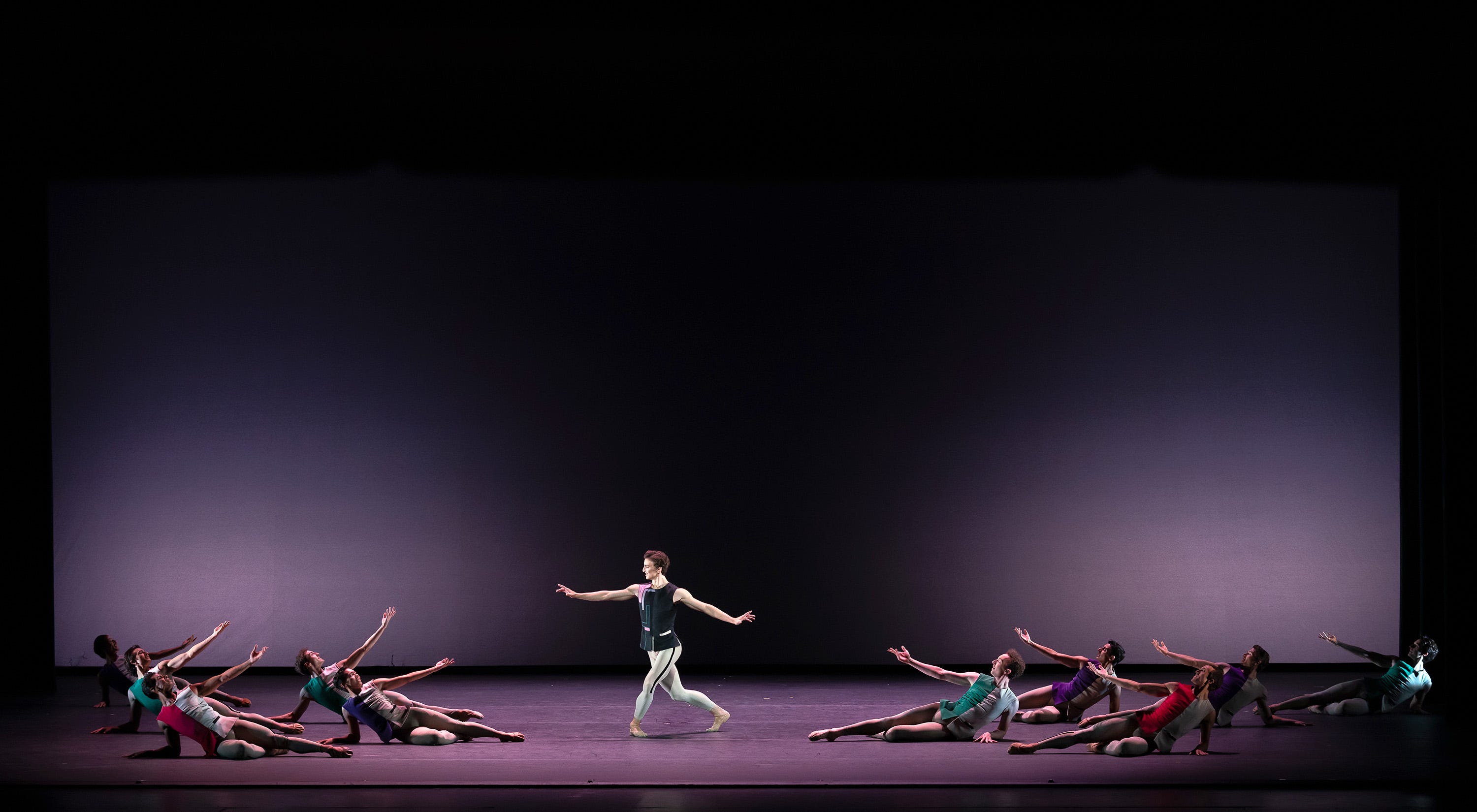
Michael de la Nuez
The rising ABT dancer is psyching up for his Don Q debut.

One of the most enjoyable things about American Ballet Theatre’s summer season at the Metropolitan Opera House is seeing lead-role debuts in classical story ballets. They sometimes bring about a magical career transformation, like when audiences at Chloe Misseldine’s July 2024 debut as Odette/Odile in Swan Lake got to witness her onstage promotion to principal dancer.
ABT corps de ballet dancer Michael de la Nuez had one of those transformative performances last summer, when he was called up to replace an injured dancer in the lead role of Prince Siegfried in Swan Lake—his first classical leading role, learned on four weeks’ notice, partnering the legendary Gillian Murphy in her second-to-last performance before she retired. Fortune favors the prepared, and de la Nuez has been working hard over the last several years to jump higher, turn faster and grow into a mature company member who would be ready for just such an opportunity. It paid off in a performance that The New York Times called “astounding.”
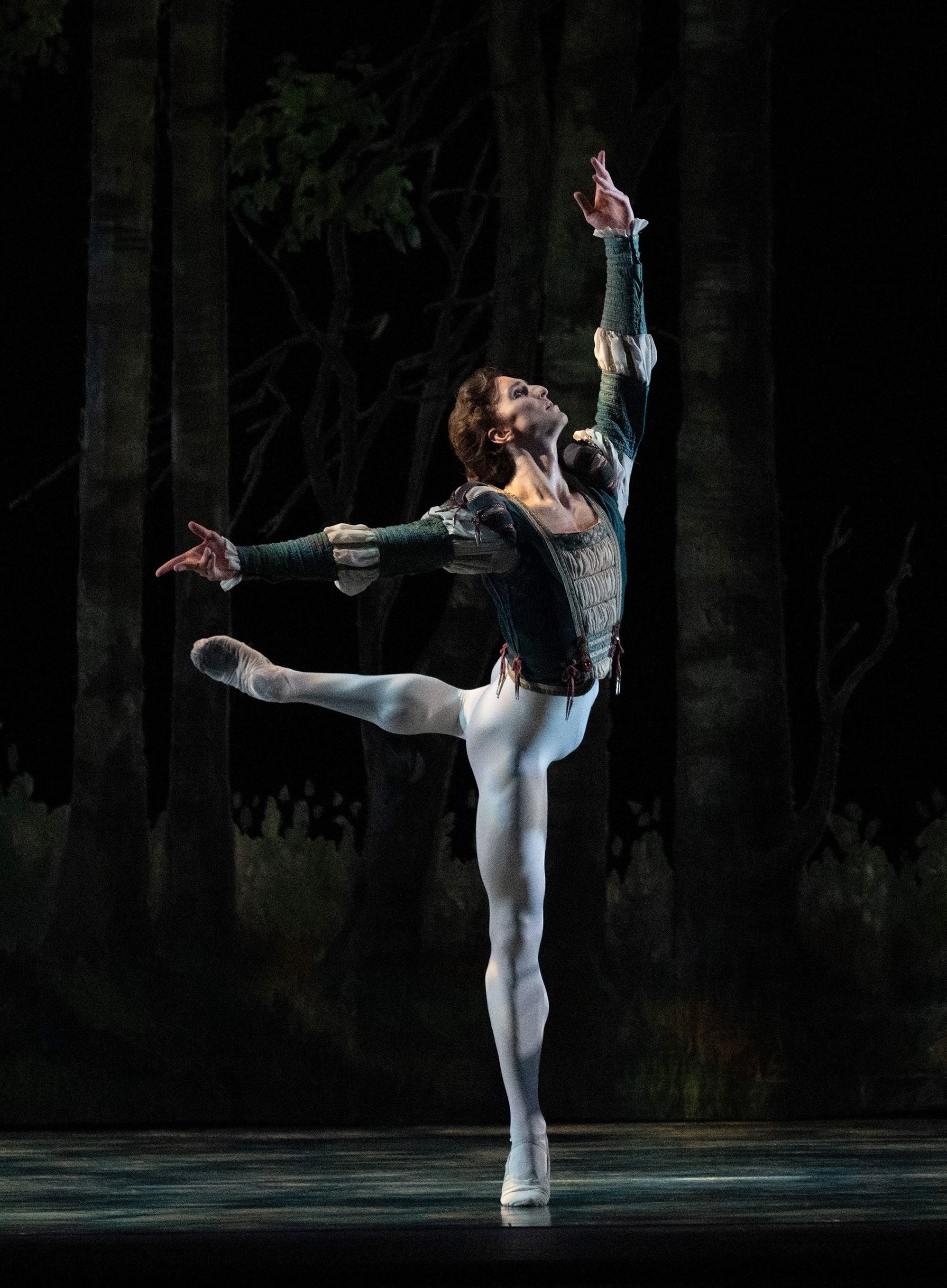
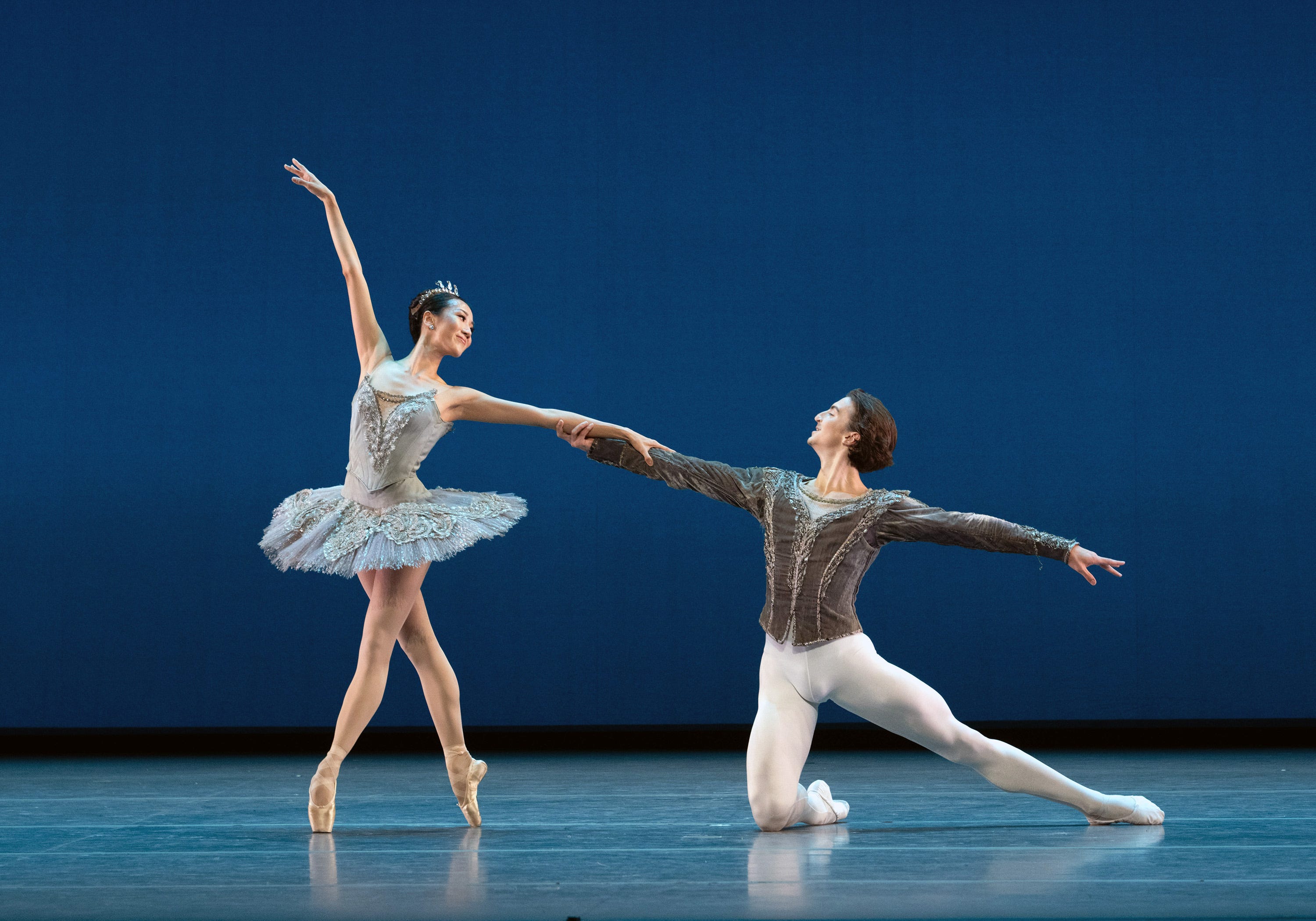
De la Nuez will get another star turn when he debuts as Basilio in Don Quixote on July 1 and 4, opposite principal dancer Christine Shevchenko as Kitri. The role’s famously pyrotechnic jumps, dazzling turns and dramatic lifts suit de la Nuez’s powerful technique, but as he says in this interview, it takes more than tricks to make Don Q romantic and comedic. Fortune also has a way of showing up for the bold, and de la Nuez is going for it.
He’s driven partly by the same ambition as any artist, but also by a sense of making up for lost time. The oldest child of two professional ballet dancers, the 27-year-old Cincinnati native grew up skateboarding, playing soccer and avoiding his parents’ dance studio, de la Dance Center. He didn’t start serious ballet training until he was 15, but he caught up quickly and won the Grand Prix at the 2018 Youth America Grand Prix Pittsburgh semifinals. (His three younger sisters also took up the family pursuit; one now dances with the Joffrey Ballet, another is with Cincinnati Ballet and the third is in a collegiate musical theater program.) We talked over Zoom about the pluses and minuses of his late start, why good technique isn’t enough, and how he navigates the interpersonal landscape of a major ballet company.
Follow @mikey_delanuez, @abtofficial and @claudiabauer101 on Instagram. For tickets to American Ballet Theatre’s summer season, visit ABT.org.
Claudia Bauer: The first time I saw you dance was in 2023, when you were in Tyler Maloney’s piece in ABT’s choreographic Incubator. It’s been really fun to see your career grow. What have you done to advance your career from then to now?
Michael de la Nuez: When you’re young in a company, you don’t really have a chance to show your abilities outside of the corps, whether that’s contemporary or dancing a pas [de deux], so the Incubator was very important for me. I think that was my third Incubator, and they were always instrumental. In one of them I got to partner another corps woman, and she was more senior, so being able to show that I have the maturity to dance with a more seasoned artist—those are huge moments that I feel like I had to search for. Because in [previous artistic director Kevin McKenzie’s] company, you’re gonna spend at least three years, four years, learning how to be in the corps. Things kind of switched up when [current artistic director Susan Jaffe] came. I had to find a new route, because she was interested in trying to create her own era of company dancers. With Tyler in that Incubator, that was Susan’s first time seeing me outside of corps work.
CB: Did you always have your sights set on ABT?
MN: My dad grew up in Cuba and came to New York, and his mentors were from ABT, and my when my mom was growing up it was kind of the golden era of ABT. We used to drive up from Ohio—my three sisters and my mom and dad—to see the Met season. So it was always kind of a dream company for me and my sisters, but [my parents] never enforced that. It just happened culturally.
CB: When you got into the company, was there a sense that you had realized the family dream?
MN: Yeah, a little bit. I kind of feel weird about that at some moments because I started dancing much later [than my sisters], when I was 15, and as a boy, it’s easier to be seen—at summer intensives, they want boys for the partnering class. So I felt like I kind of swooped in. I mean, I’m the oldest, so it did happen first for me. But they are all super proud of me being at ABT.
CB: I read an interview where you said that starting late in ballet was a superpower, but the other day on Instagram you said that you have misgivings about it.
MN: I didn’t think about that contradiction until you just said that. I do think it is a superpower, [but] I feel like I’m living in imposter syndrome, because by my third year dancing I moved to New York. I always kind of felt like I needed to catch up. I had a rehearsal today for Don Q, and it hasn’t gone away. I haven’t figured it out yet. There is an urgency in me that in every rehearsal I need to soak up as much as I can, because I didn’t have the base of studying in a school like Royal Ballet or San Francisco Ballet, or any of those renowned schools. That’s why sometimes I feel like it could be a hindrance. I need to stop thinking of myself in that way, but at the same time, that hunger for learning has helped me a lot.
CB: There’s a plus side in that it makes you driven and single-minded. But eventually we have to mature into a new level.
MN: Yes, absolutely, and that’s what I feel like. When I joined the company, I knew how to do the technique, but I had no idea how to work in an institution. You’re no longer in a studio, you’re no longer a kid that people see talent in and want to help along. All of a sudden you’re in a room full of 90 dancers who are as talented or more talented, and they come from much more education. I had to learn the hard way how to be in a room with a director, and how being yourself always isn’t always good. I grew up in my family’s studio, so I was very comfortable in the studio, and that doesn’t always come off well when you join a company. You can become a hindrance to the rehearsal process if you’re too friendly and too talkative.
CB: Sounds like you had to become more professional, to a degree that hadn’t been required of you in the past. You were able to reflect and ask yourself, what do I need to change?
MN: Yes, and I feel like that’s where [starting late] helped me. I felt like I had so much to learn from everybody, and I was so happy to finally dance with other men—a group of like 30 men. It was more of how I was perceived from the front of the room.
CB: Some dancers who come to serious training relatively late, after focusing on sports or other activities, feel like there were physical benefits because their body hasn’t been so siloed, or that they have a broader perspective than they would have had. Is that the case for you?
MN: I would definitely say so. I’m very grateful, because [growing up] I didn’t want to be in the studio. I felt a little bit like the black sheep of the family, pushing [ballet] away for most of my childhood. Skateboarding was huge to me. I thought I was gonna be a professional skateboarder. I dove deep into other cultures that still affect me and influence how I dress or the music I listen to. I wouldn’t say broader, but I feel like being a little street kid, I enjoy very different music and art than most of my friends in the realm of ballet. I feel like that influences how I dance and how I view myself.
CB: Do you still skateboard?
MN: No, no. I used to use it as transportation, and then one day I fell and hit my wrist. It wasn’t anything bad, but I couldn’t do lifts. After that I was like, I can’t do this anymore—one little thing like that, and it’s a big deal.
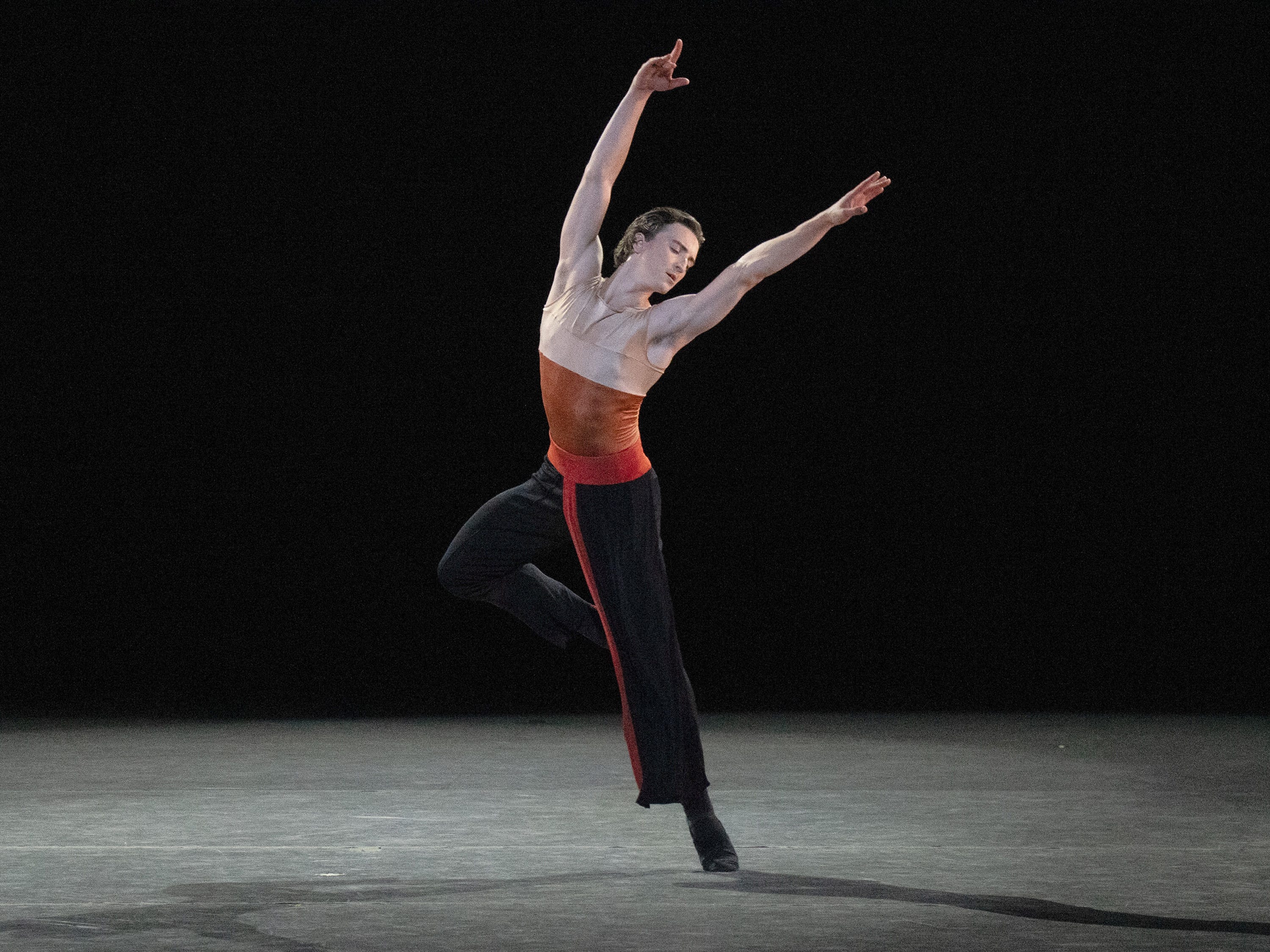
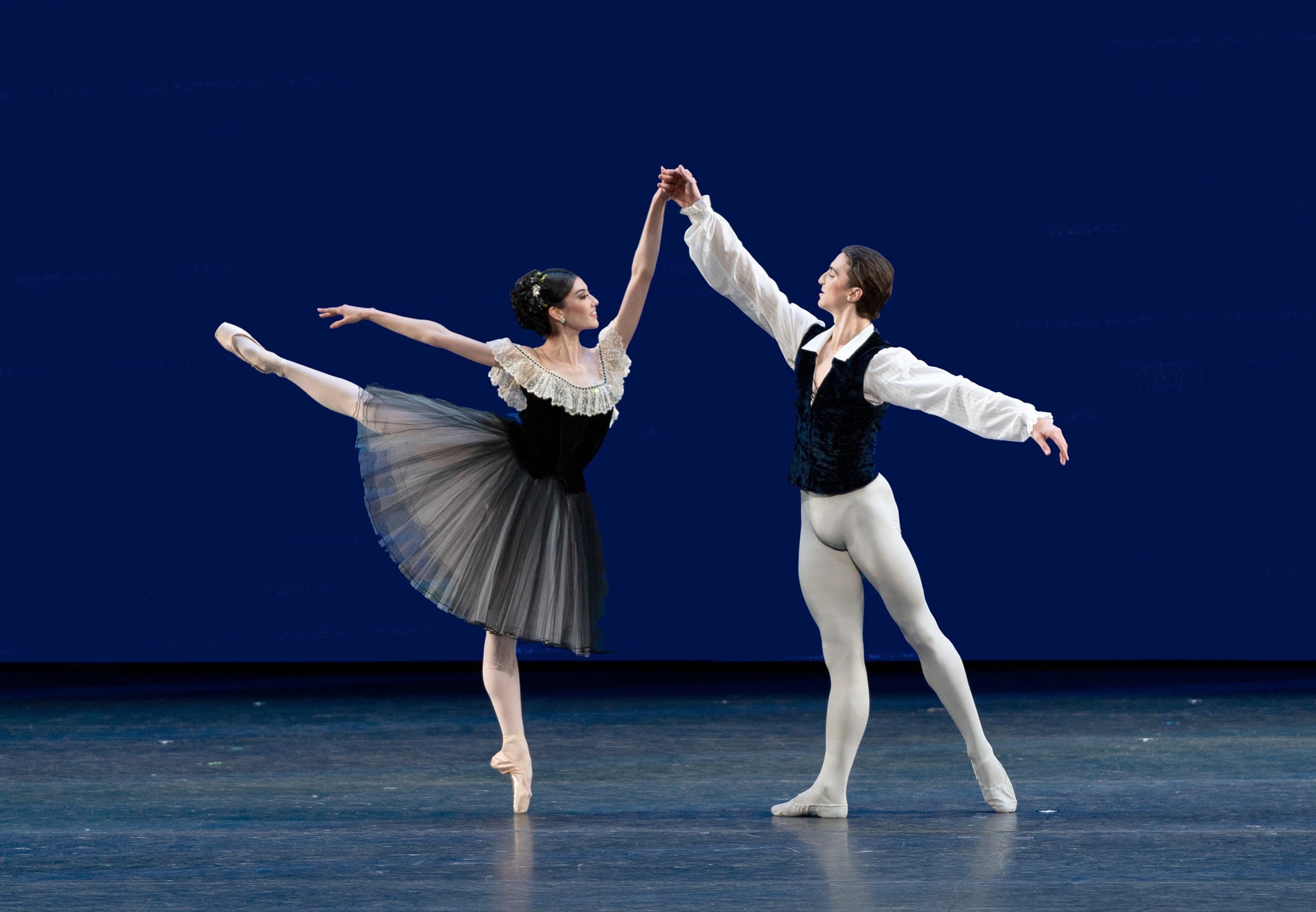
CB: You’ve danced some big roles: The peasant pas in Giselle, Alexei Ratmansky’s Serenade after Plato’s Symposium, and of course last summer you did Swan Lake with Gillian Murphy. What was that like?
MN: It was crazy. I hadn’t ever danced a classical role until peasant pas, and that was literally weeks before they told me that I would be learning Swan Lake. I think they give [young dancers] opportunities sooner in contemporary works and neoclassical works, because it’s not such a precise image. I did [Alonzo King’s Single Eye], and that was a huge thing for me, but that’s way different than being in white tights and a tunic. Being in that realm of classical clarity—that’s very intimidating. You do roles where you’re wearing a neoclassical costume that’s more flowy, or you’re wearing cutoff tights with a tan shoe, and the music is very amorphous—all of a sudden you’re doing Swan Lake, and everybody knows what the fouettés are supposed to look like, everybody knows what the male variation is supposed to look like, and the pressure is much higher.
I can’t speak highly enough to Gillian as an artist and as a person. Not a lot of people would take a risk like that in their last season, and she seemed to not only accept it, but she took it on. There was no ego, like, “I’ve done this, and you gotta really pick it up.” She kind of stooped to my level, and each week that level was raised a little bit. But she never looked at me from any other angle than equal. So I felt very comfortable being in a realm that I’d never been in before because of her, and I think it would be very different if it wasn’t with Gillian. I think I could have done it, but to the level that I felt comfortable on stage with her, and being so young—I felt so artistically capable in the performance, internally at least. That was all very heavily influenced by Gillian.
CB: That was an immense responsibility, with it being her final week onstage. Clearly, you can handle a lot of pressure.
MN: I remember when they first told me, I went home and I watched Gillian and Marcelo [Gomes] on [ABT’s] Vimeo. I always idolized Marcelo, and when it came to Act Three, it was overwhelming. It was so hard to take in that level, that scope of what it means to me, growing up watching Gillian and Marcelo. I cried watching the whole third act, and it hit me deeply. I had to block that off, like, All right, I gotta move forward because I’m doing this in four weeks. Although it can be very helpful having a strong emotional tie to a ballet, I felt like it could be a hindrance when it got to the stage, because of the pressure of the moment. I kind of pushed it aside and took it day by day from there, and that’s how it was more palatable for me.
CB: In the Times, Gia Kourlas said your debut was “astounding,” and while she described you as “understandably green,” she noted your “power … elegance … commanding presence … ability to convey emotion through dance.” That is quite a rave review.
MN: When I read that, I was just so happy. It wasn’t until after the show that I realized how much of an effect that would have on my career. I think that’s what I’m telling you about Gillian—if it were somebody who was just as seasoned but maybe more internal, or very specific in how they go about it, maybe they wouldn’t have had room for me. It’s a flashy term nowadays, but Gillian made space for me in a real way, where I felt I was able to be vulnerable with her.
CB: It sounds like Gillian’s depth of experience and her way of being a partner back to you made it successful. But you’re also making the observation that a lot of what happens between people on stage is a matter of personality fit and chemistry. Even if people are great actors or dancers, when the chemistry is authentic, it elevates the connection on stage.
MN: Absolutely.
CB: Looking ahead to your debut in Don Q, what are you excited about, and what is intimidating?
MN: I’ve always wanted to do Don Q. My dad’s Cuban, so I always looked up to Carlos Acosta as a Cuban dancer, and a lot of his videos were Don Q. Being able to be Basilio as a character is huge, and dancing with Christine—she’s very technically able and she’s very free, so I feel like I have to again jump up a few levels just to be able to hopefully match her.
[Prince Siegfried in Swan Lake], as a character, I found easier to play because the borders are kind of there. You’re a prince, you are a part of this kingdom, you’re coming of age, and you have to be a certain way—all that aristocratic behavior. It’s more cut and dry. Don Q is seen as lighthearted and silly, and just a lot of pyrotechnic steps. At the same time, Basilio is harder to [portray], because you have to be yourself. Who’s Basilio to you? That’s going to look very different than Herman Cornejo or Carlos Acosta or Jake Roxander. [ABT principal Cornejo dances Basilio on June 30; soloist Roxander gets his Basilio debut on July 3.] It’s much more vulnerable to have to show yourself in a comedic way. Having to be comedic in a room full of your colleagues, and having to be sexy, and silly, and macho—even though it’s very slapstick, I would say it’s more revealing.
CB: Yeah, Siegfried has to be ardent and sad, but there’s more leeway with drama than with comedy, which is 100 percent timing. Like you say, it’s super vulnerable. And when it works, it looks so easy.
MN: It’s been done by a lot of the legendary dancers, like Baryshnikov and Acosta. There’s so many different takes on it that it’s a much deeper rabbit hole, in a way. Are you going to be the more physically comical Basilio? Are you going to be the more dramatically comical? Are you going to be more laid back and suave? There’s a lot more avenues to go down versus a Swan Lake.
CB: Are those choices that you and Christine are making together?
MN: Yeah, and that’s a hard thing, because Christine is at the height of her career. I want it to be okay, and I’m trying to tailor it to how she wants to be, and she has also been very open. I did Nutcracker with her in [Costa Mesa], but again, Nutcracker is very dry. Trying to build a relationship with Christine [for Don Q] was more intimidating. Communication is definitely necessary.
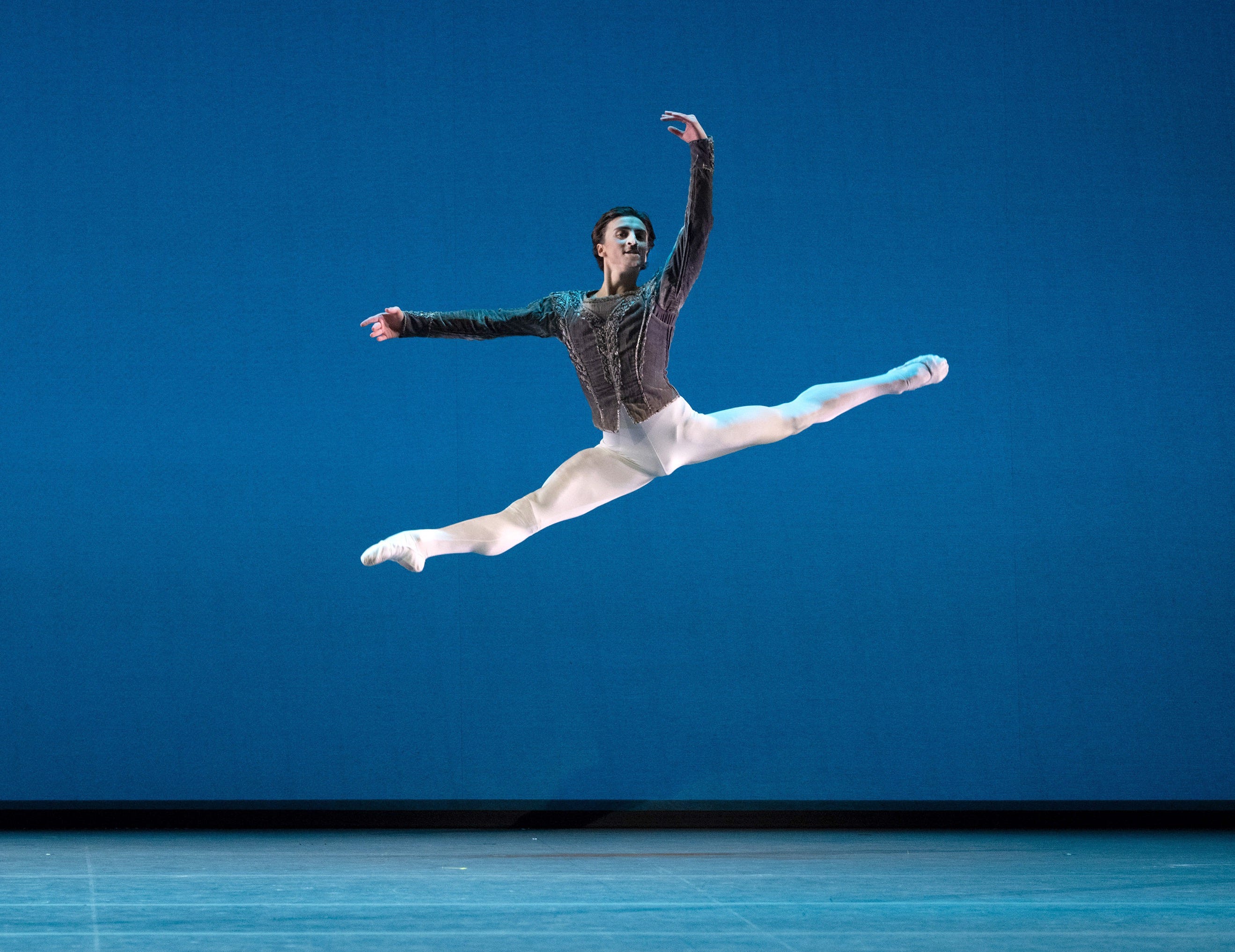
CB: I don’t know if the Don Q choreography comes naturally to anybody, but it seems like it’s in your wheelhouse. I saw some rehearsal video you posted on Instagram, and your jumps look amazing.
MH: I definitely would say it is in my wheelhouse, but doing it at the level that is expected is the hard thing. A lot of people can do the tricks, and I can do some tricks, but doing tricks in class versus having to pull it all together and do it in a very succinct order—you gotta have the stamina, and you have to be able to maintain the character while doing the technique. There’s a lot of moments where it’s sort of up to me what the choreography is. So finding the choreography has been a little hard, because it’s free rein, but I am very excited about being able to do that. And the music is a dream.
CB: Are you doing anything extra to prepare, like weight training?
MN: That’s another hard thing. I started working out with one of our trainers, but working out and then going into rehearsal with Christine was very hard. The more we get into the rehearsal process, I need to do more after the fact—rolling out. Because a lot of those jumps are very taxing, you can’t do them every day. It’s more about learning about how to pace the rehearsal process.
That video that I posted, I had just tried that jump for the first time in like two weeks. It was very taxing on my hip flexors and my back, so I wanted to be available for the things that were important, like the partnering that I really needed to learn. Now that I feel like I’m in better shape, I’ll do that [jump] more in my rehearsals. Like today I did a full run with Christine of Act Three, and it was less taxing because it was less foreign to me physically. So I’m not doing more in the sense of working out, but more taking care of my body and workload pacing. You have to be smart about the workload.
CB: As you look ahead to your future, what are you hoping for?
MN: I just want to keep moving forward with principal roles, and being able to be comfortable artistically, and be as “myself” as I can be. Like I was explaining to you in the beginning, once I realized that, Oh, maybe my problem isn’t my dancing, maybe my problem is my behavior in the studio—and I’m very hyperactive, I have ADHD and that’s been a problem for my entire education—I tried to pull back and be more subdued. What I look forward to doing, as I get more comfortable—and this daunting process has been a huge part of that—is letting myself be a little bit more how I am naturally.
You have to be at peace with being open. It’s funny, it’s kind of embarrassing to be so revealing in the studio. I find it easier to be revealing on stage, because you’re in a black box and you are in the moment. But to be able to do that in the studio is a big part of moving forward and being a mature dancer. So I would like to move forward in my artistry and do it soon enough that I can still do all those pyrotechnics, I can still do all the technique that it requires, and then deliver an artistic level that I know I can. But it takes time. It takes a lot of letting go of your ego. I am also interested in merging dance with outside things too, and I would like to grow outside of ABT as well. But this year I’ve been very focused on who I can be in ABT.
For tickets to American Ballet Theatre’s summer season, visit ABT.org.