
If the Shoe Fits...
A deep dive into Ballet22 with Daniel R. Durrett and Zsilas Michael Hughes

To paraphrase the folktale, Ballet22 is a little company that can. Both defiant and reverent of ballet traditions, the company was founded in 2020 in Oakland, California, with the intention of breaking ballet’s gender norms. On one weekend each summer in San Francisco, Ballet22 presents male, trans, and nonbinary artists, mostly on pointe, in works from the classical canon and in commissioned pieces focused on LGBTQIA+ representation.
Producing the company’s three-week summer season—comprising two weeks of rehearsal, a week of production and a weekend of shows—requires 52 weeks of care and curation by executive director and co-founder Theresa Knudson and co-directors Lorris Eichinger, a dancer with San Francisco’s LINES Ballet, and Daniel R. Durrett, a soloist at Boston Ballet. Their investment pays dividends—in dancers who push the boundaries of pointe ever further and who feel a creative agency that isn’t feasible at their full-time companies, as well as in an ambitious repertoire that includes works by Petipa and Bournonville, William Forsythe and Annabelle Lopez Ochoa, and emerging contemporary choreographers. Just as importantly, Ballet22 makes a principled, uncompromising stand for equality and humanity.
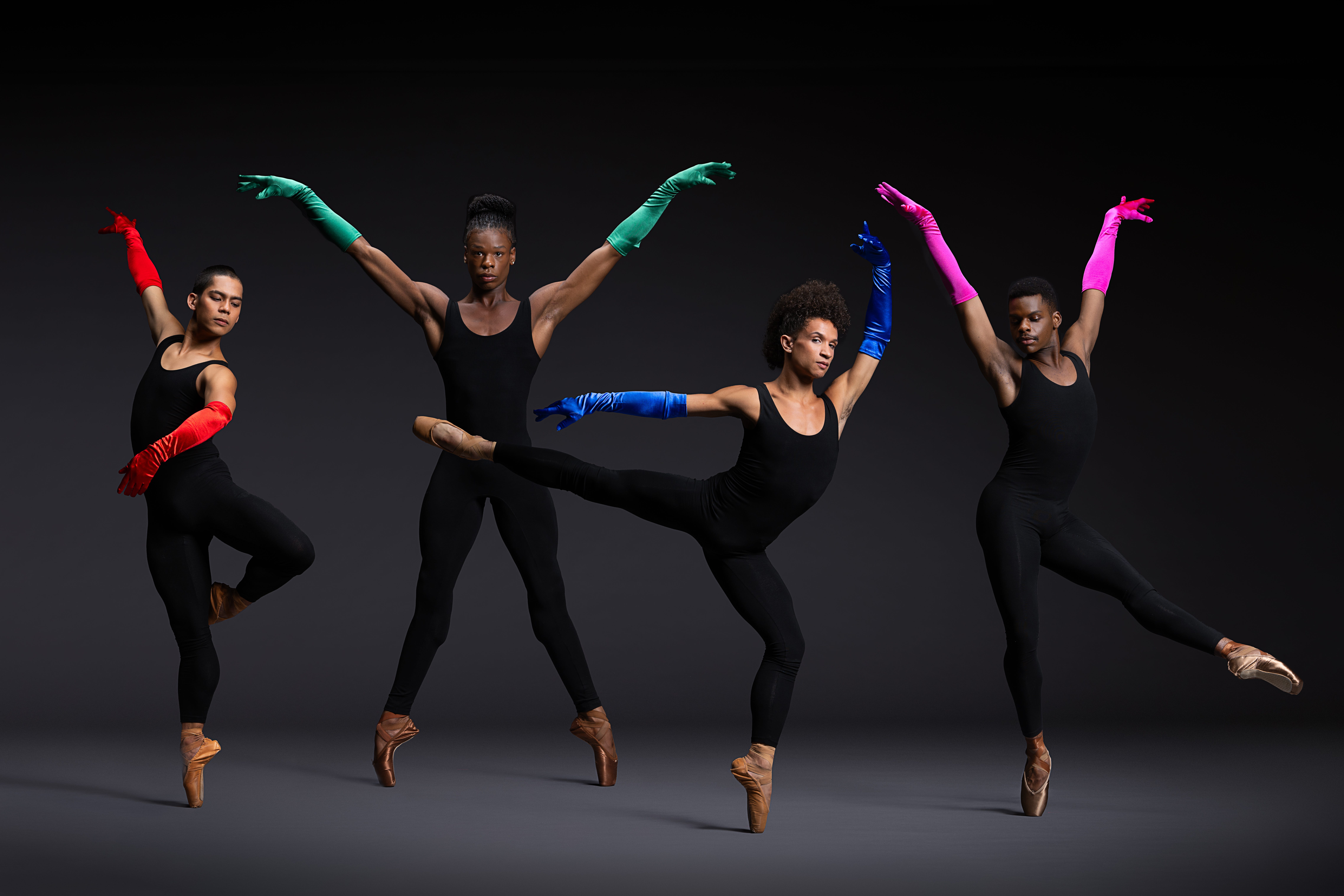
The program for this season, which takes place July 19 and 20 at the Cowell Theater in San Francisco, is chock-full, with classical variations from Swan Lake (Zsilas Michael Hughes, Pacific Northwest Ballet), Esmeralda (Durrett), Talisman (Trevor Williams, Ballet Pensacola), La Bayadère (Kobe Courtney, formerly of Complexions Contemporary Ballet), Le Corsaire (Jake Speakman, Les Ballets Trockadero de Monte Carlo), and Walpurgisnacht (Victor Maguad, Sacramento Ballet), plus two contemporary pieces—a restaging of City of Humans by American Ballet Theatre principal dancer James Whiteside (formerly titled City of Women and commissioned for Ballet22’s 2024 season), and the world premiere of You Can Have Me! by Princess Grace Award–winning choreographer Roderick George.
After a rehearsal, Durrett and Hughes hopped on Zoom for a deep dive into the season, Ballet22’s ripple effect, and the Cinderella-level importance of the right pointe shoe. Our conversation is lightly edited.
Claudia Bauer: As usual you’re doing a wide-ranging rep. What is Roderick’s new piece like?
Daniel R. Durrett: It’s going to be a 20- or 21-minute piece. It’s celebrating the queer community, and it also celebrates Black excellence, in my opinion. Everyone is involved in that piece, and it’s going to be hard.
CB: Ballet22’s rep just keeps growing.
DRD: We’re very excited to have different choreographers each year, and each year we are learning and growing for the better. [Roderick’s] piece is going to be one of the hardest pieces that Ballet22 has commissioned. It’s very demanding stamina-wise, technique-wise, and also the partnerships. In big ballet companies, it is so hard to trust people and let go, and be yourself. In this piece, we all have to be on, we have to know what we’re doing. When it’s such a small group of people, it’s very telling. The partnering things that we are doing—height-wise, body shapes, it’s very hard.
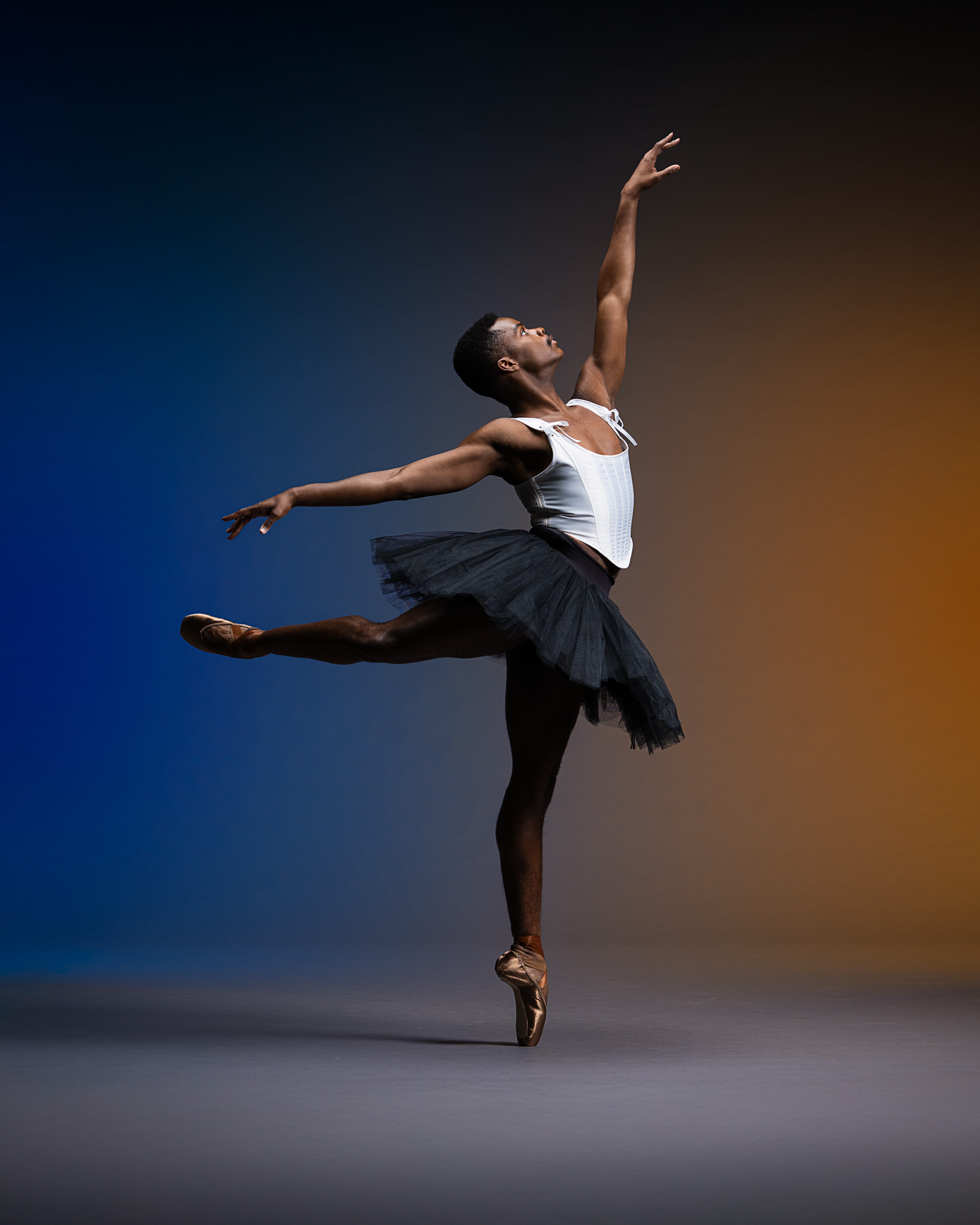
CB: Zsilas, the last time we spoke was for Dance Magazine, in advance of Ballet22’s 2024 season. At the time, you said of Ballet22 that “it took a minute to truly allow myself to believe that the people leading the company truly believed in me,” and that dancing the Golden Fairy variation from The Sleeping Beauty with the company felt transformative. It’s now your third season with Ballet22, it’s another year into your life as an artist at PNB, and it’s another year into your pointe technique. How do you feel you’ve evolved since then?
Zsilas Michael Hughes: I think drastically. For the better. I have really learned a lot about myself in the last year and a half, in particular to how I approach work. It’s no longer just about ballet itself; it’s about, what am I really doing, what is the message that I’m sending, why am I really doing this? What is the integrity behind the physicality? Asking myself those questions has allowed me to reach a vulnerability inside myself. So now, when I put that [pointe] shoe on, it’s not, Oh my god, I’m so scared of what this shoe is going to do—it’s, I’m so excited for what this shoe is going to give me. So that has really elevated my dancing as a whole. And being able to work with a choreographer like Rena Butler [who choreographed Cracks for PNB’s 2024–2025 season], who has truly poured into me, not only as a dancer but as an individual, giving me—not the permission, but the insight that I am beautiful, that I am good, that I am talented. So, trusting in myself has been a new revelation. And it’s been really, really fun to be excellent, and to be proud of myself, and to be open. Yes, I’ve learned to do more fouettés. Yes, I’m stronger on pointe. But it’s also been transformative on a whole new level. There’s strength, there’s courage, there’s love, and all of that is what’s fueling my progression.
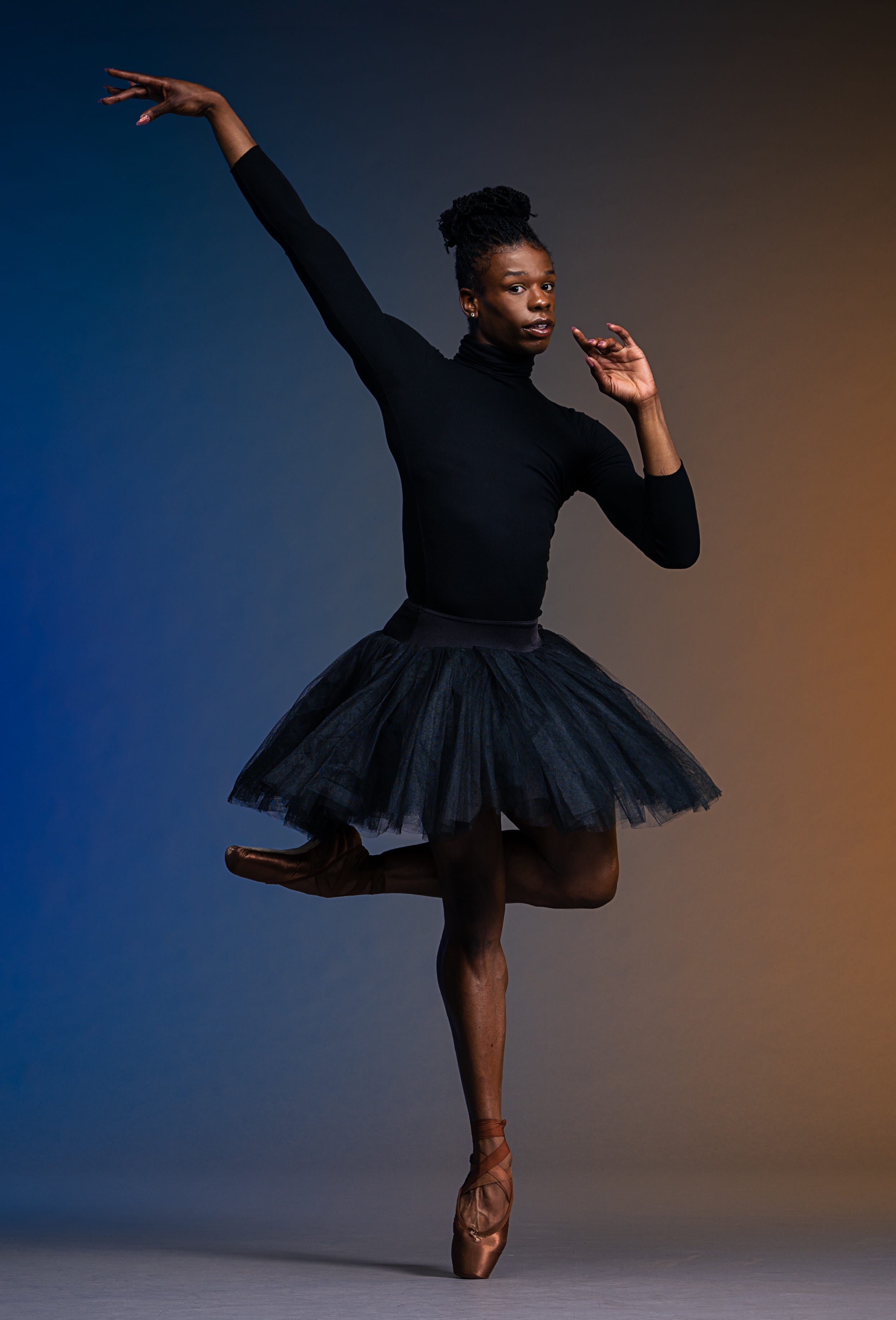
CB: What I’m hearing you say is that there’s a lot of synergy, even more than before, between what you do at Ballet22 and what you do at PNB.
ZMH: Absolutely. I use them both to my advantage, because they both give me great benefit. I have so much freedom here, and I have so much respect here. I take the love that I have from this place, and I let it fuel me when I’m at PNB, and then I take the rigor and the strength of PNB’s work into this. It’s so amazing to feel like everything is connecting.
CB: Dani, I see you nodding. Do you feel the same about Boston?
DRD: I don’t dance on pointe in Boston. But I think the hectic schedule in Boston helps me maintain my calm in rehearsals [here]. I also have found a new confidence on pointe this year, because I don’t train on pointe year-round; once Ballet22 is over, I don’t really put the pointe shoes on until the next summer. I put them on here and there just to keep my ankles going. But I don’t have time, because at Boston we do program after program, and I don’t want to, like, get an annoying blister and then have to lift people above my head. So, I come here and I’m like, okay, I know what I’ve learned about myself from last summer, and I need to continue that each summer. And also, having the right shoe on will make or break me, honey. Because sometimes I’ve got a really bad shoe on [laughter]. It’s true! You’ve got a bad shoe on, girl, and it’s, mm mm.
ZMH: There’s no hope.
DRD: There’s no hope. [laughter] You got a bad shoe on, ain’t nothing happening [laughter]. All jokes aside, I use this confidence that I have with Ballet22, and I take it to Boston Ballet. Because in a big working space [like Boston], it’s really easy to lose that confidence, to lose that will to continue on and prove yourself. Coming here and seeing everyone working hard and putting in the effort—we basically have two weeks to put together a whole program. Because the third week we’re rehearsing, and then we tech and then we dress and then we’re performing. It’s a fast process, and everyone’s been so wonderful, doing their homework. Or people running their variation, even though we’re not doing that variation today. Having that sense of community is great.
CB: Everyone is intrinsically motivated to do this, without a big company telling you what to do.
DRD: And this year, we didn’t do a classical section that was inspired by a full-length ballet. [In 2024, Ballet22 performed a suite of variations from The Sleeping Beauty.] The dancers got to pick the variation that they wanted to do. It’s been really beautiful to see everyone do a solo that really makes them happy. I think this year the classical variations are the best they’ve ever been, because they’re coming from a place of love and willingness.
CB: Dani, you’re also part of Ballet22’s leadership. How much time does that take?
DRD: It’s year-round. Unfortunately, I’m not in [the Bay Area] to help with [fundraising] or going to donor dinners. Lorris has been really wonderful with that with Theresa. I more so do the scheduling, picking out costumes and music, reaching out to choreographers. I met Roderick in Cincinnati when he was teaching there for the summer, which is where I’m from, and I was also teaching there. He danced with Forsythe, and I’ve danced Forsythe in Boston. I know James Whiteside from when he choreographed a work in Boston. I love his work; it’s very free, it’s very open, it’s very now.
CB: Dani, how do you feel the company has grown since the you, Theresa, and Lorris joined forces three years ago?
DRD: We all have certain things we take on. Lorris takes on contemporary works and fundraising, I take on the classical variations. I’ll talk with the dancers—what do you need from us, how are you feeling, what can we do? Sometimes directors get so disconnected, and it’s really strange, but especially directors that were dancers, as soon as you have a leadership role, you’re constantly thinking about Point A to Point B. It’s nice for me to check in on people and also be able to calm things down if people are feeling anxious, or tired, or uncomfortable. Because that’s the whole point of Ballet22—to come here for the summer and feel comfortable, feel free.
CB: Zsilas is nodding behind you. Zsilas, is what Dani’s saying accurate? Do you feel supported?
ZMH: I have never been in a place where I feel like every word I say means something and is listened to. I feel so grateful to know that the directors are curating the entire three weeks for us to be successful. We feel that. Not only is there love, but there is direction, and there is reassurance. Having such a positive foundation is what allows the dancers and the company to be so successful. The experience of Ballet22 is truly magical.
CB: The world around us has changed a lot recently, unfortunately, and I wonder if there is a role that Ballet22 plays in the new landscape. Maybe it’s as a hyperlocal safe space, or perhaps there is a ripple effect you hope it might have.
ZMH: If I may, I know Theresa is truly taking a strong stand about creating an experience of humanity for the audience. I think right now, more than anything people need to feel like people. And through her curatorship, allowing us to be a bridge for not just dancers, but humans, everyday people, to find themselves in art, to find an appreciation for it, and wanting to invest in it, and understanding the necessity of art. There are so many people that need something to believe in, something to hold on to, and something to inspire them. Even though we’re in the time that we’re in now, which is a little devastating for so many different parties involved, Ballet22 is a beacon of hope. It is a true representation of what can become of the next generation of dancers, of humanity, and finding triumph through tragedy. I really hold Theresa in a gracious place in my heart, because she understands what the world needs right now. We’re really pushing towards getting that message out.
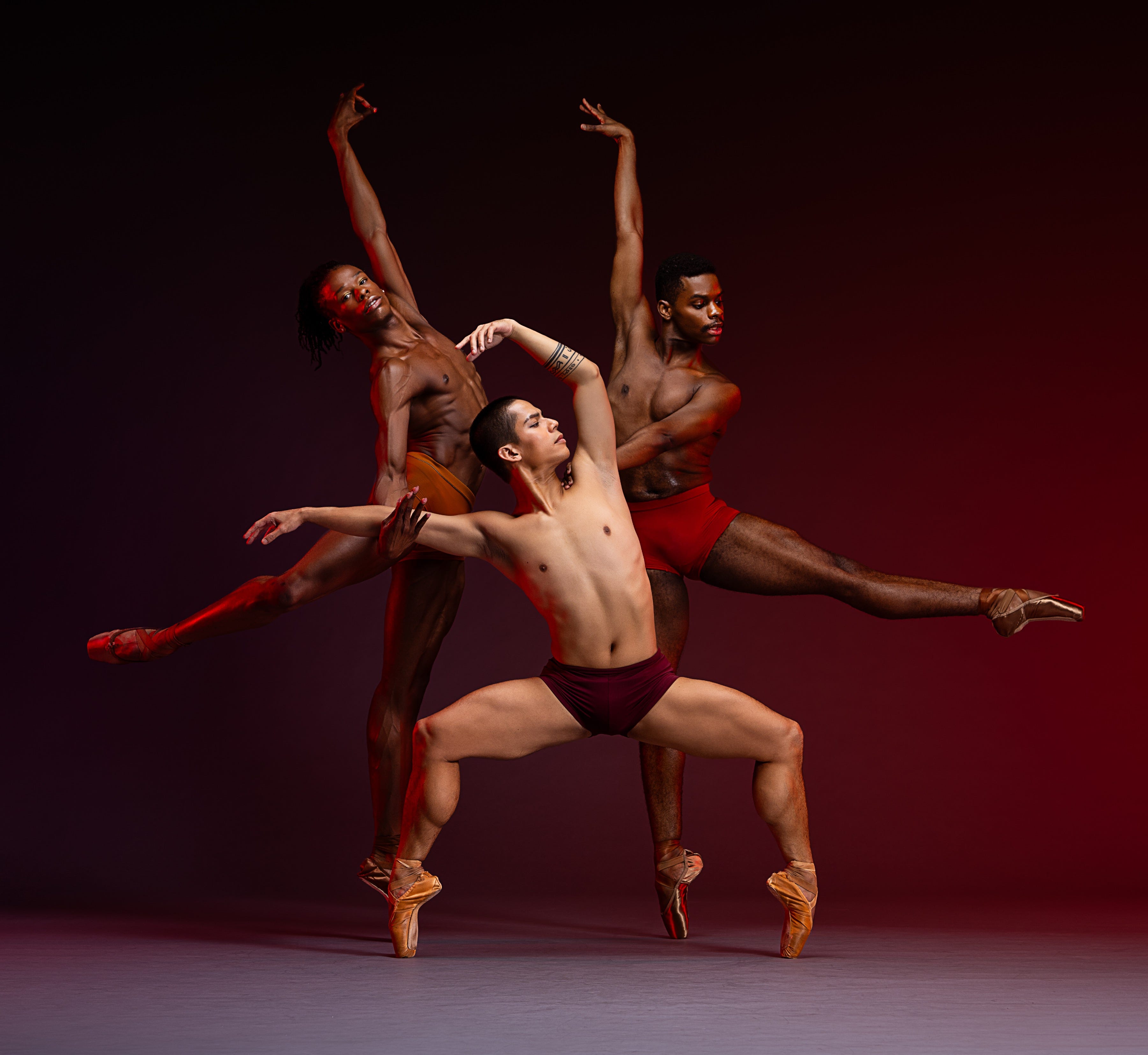
CB: What are your hopes for the coming year for Ballet22?
DRD: I would love to see the company grow in size, and also—it takes a lot of money and time and space—but I would love for it to become a year-round company. Three weeks is just not enough time.
CB: When you envision this idea of a year-round company, is that in response to demand in the world for this kind of work and opportunity?
DRD: Yeah, indeed. It’s just so boring seeing the same kind of work being presented all the time. You have a ballerina, and you have a guy. Every company does the same ballets, the same steps—it would be nice to turn the tables on all these ballets and choreographers. There’s just so much more out there and so much more to explore.
ZMH: I’m so grateful. I wish people knew the multitude that this little group is doing. The work is so impactful. The interest is no longer “men on pointe,” it’s how we’re moving, how we’re doing the work. It’s a deeper dive into what is it to be human, what is artistry, what is dance? The question is not, can you dance on pointe? It’s, how do you dance on pointe? It’s not about whether we’re able to—of course we’re able to, we’ve been doing it for years.
DRD: We’re here giving a performance, giving it our artistry, giving it our all. And I think the audience can see that.
Ballet22 performs at the Cowell Theater at Fort Mason Center in San Francisco July 19–20, 2025. Tickets are available here.