
Chiara Gorodesky
The vildwerk. founder on dancing to save the world.

Becoming an environmental activist, a dance impresario, and the founder of an international nonprofit was not part of Chiara Gorodesky’s life plan. Born and raised in Munich, she practiced law in London for 18 years before moving to New York City in 2013, just before giving birth to the first of her two children. Nothing in her background pointed to founding vildwerk., a nonprofit that promotes environmental awareness through dance performance—except that kind of everything did: She was a lifelong ballet lover, a devoted guardian of turtles and a savvy businessperson with a solid network of well-positioned friends and colleagues in a wide range of fields. All she needed was a vision, which came to her one day when she was daydreaming about doing something she would truly love and find meaningful.
vildwerk. had a big launch and has only gotten bigger. Its debut event, a dinner held at the Bowery Hotel in May 2023, was chaired by the choreographer Christopher Wheeldon and featured a tortoise-preservation theme, the dancer Mara Galeazzi in a solo choreographed by Joshua Beamish, musicians from the Metropolitan Opera Orchestra and esteemed conservationists. That evolved into an annual gala, eventually named Dancing for the Wild, featuring environmentally themed collaborations between choreographers, visual artists, composers and dancers from companies like New York City Ballet and the Martha Graham Dance Company.
After a debut at El Museo del Barrio Theater in 2024 and four sold-out nights at New York Live Arts in 2025, Dancing for the Wild will be presented by New York City Center on January 21, 2027. And vildwerk. keeps expanding like a rhizome, popping up new initiatives like school outreach programs, participating in significant environmental and climate events, and garnering global interest and supporters. The next Dancing for the Wild show takes place on Friday, June 5, under the night sky at the Bryant Park Picnic Performance.
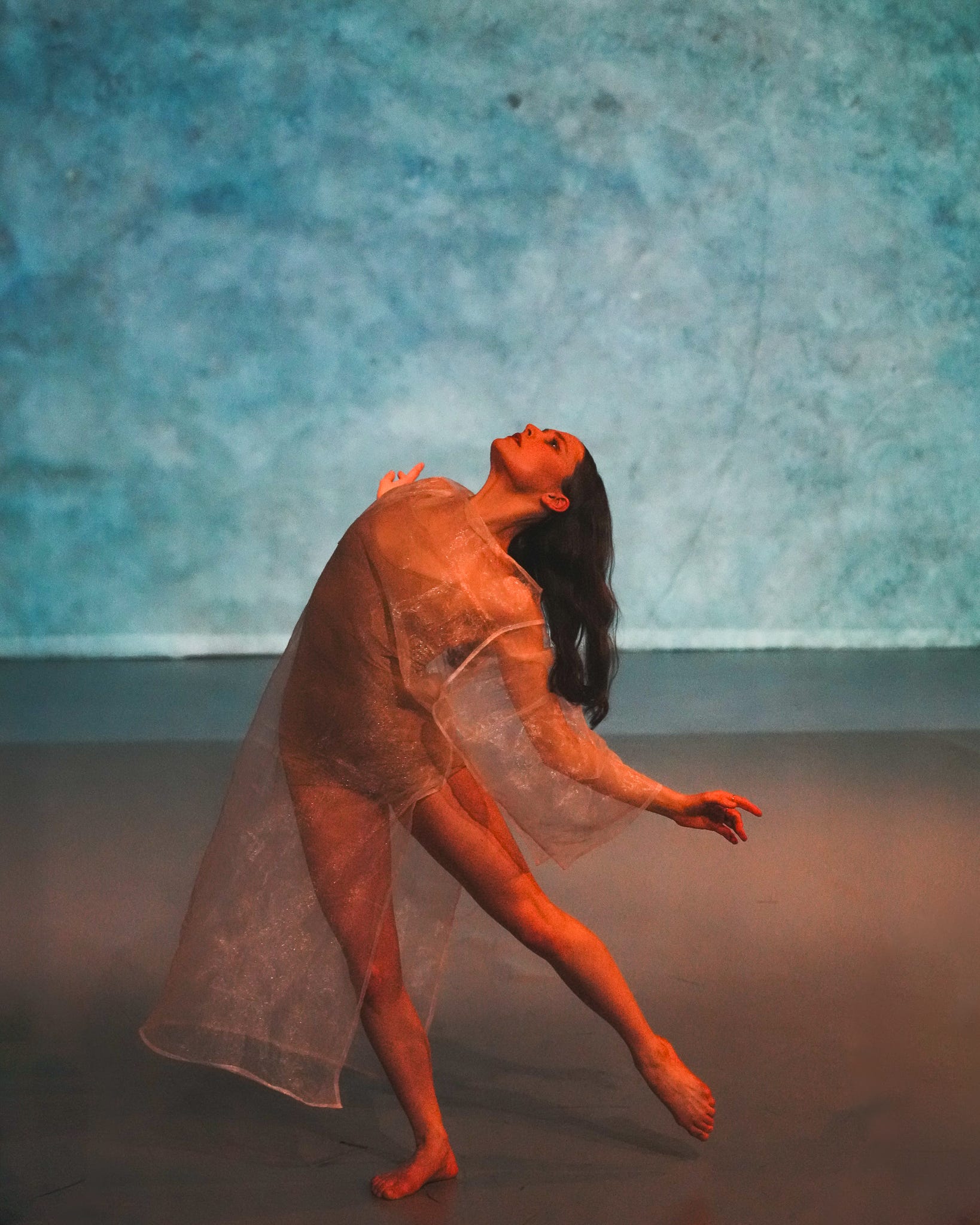
Gorodesky’s intelligence, passion for dance and nature, and knack for building supportive relationships got vildwerk. off the ground. But taking any endeavor past one’s own native abilities takes courage, leadership and valuing learning more than fearing failure. There is a lot to be gleaned from her experience, and from how she is growing along with vildwerk.
Follow @chiaragorodesky and @vildwerk on Instagram. For information on vildwerk.’s Bryant Park Picnic Performance, click here. Follow me @claudiabauer101 on Instagram.
CB: How did you get inspired to start vildwerk.?
CG: It’s very weird, my background. I am not a professional dancer at all, I’m a dance lover, and I’ve always taken ballet classes from young age. I’m one of those eternal ballet-class goers, so if you find at some point in the future a woman with gray hair at Steps in a ballet class, that’s me. I just love it very much.
I became a lawyer, and then a group of my friends moved to London to go to university there. I lived in London for 18 years, taking ballet classes and seeing a lot of Royal Ballet. I was then invited to be the youngest committee member of the Ballet Association. They do bi-monthly events with Royal Ballet dancers and choreographers, and the patron is always whoever the artistic director is, so at the time it was Monica Mason. I did housing and property litigation and almost went into the route of becoming a deputy district judge, and after my workday ended, I was all ballet. Also, from childhood on, I’ve kept tortoises and turtles. I became involved in conservation and met a lot of amazing conservationists. It’s a small world, like the dance world, where people overlap and sit on each other’s boards.
I moved to New York 14 years ago. Then I had two children, who are now 13 and 11, and I thought, well, what should I do next? I don’t really want to do law and do the bar exam [in the States], because there are more important things, and now I need to do what I love. I just sort of made up something that initially combined turtles and ballet, and I founded the nonprofit. It was very random. The main trigger was the Turtle Conservancy, which is relatively speaking a small nonprofit, but in the turtle world one of the big nonprofits, and they have an incredible board, and they work with wonderful conservationists. We were invited to Ted Turner’s estate in New Mexico, where we rewilded a very rare desert tortoise [the Bolson Tortoise]. We were a very small group, maybe 15 or 17 people, and we literally released them into the wild with monitors, and it was the first time in many years because they’ve been extinct. Ted brought back the bison and the wolves, all the key species, and one of those key species was that tortoise.
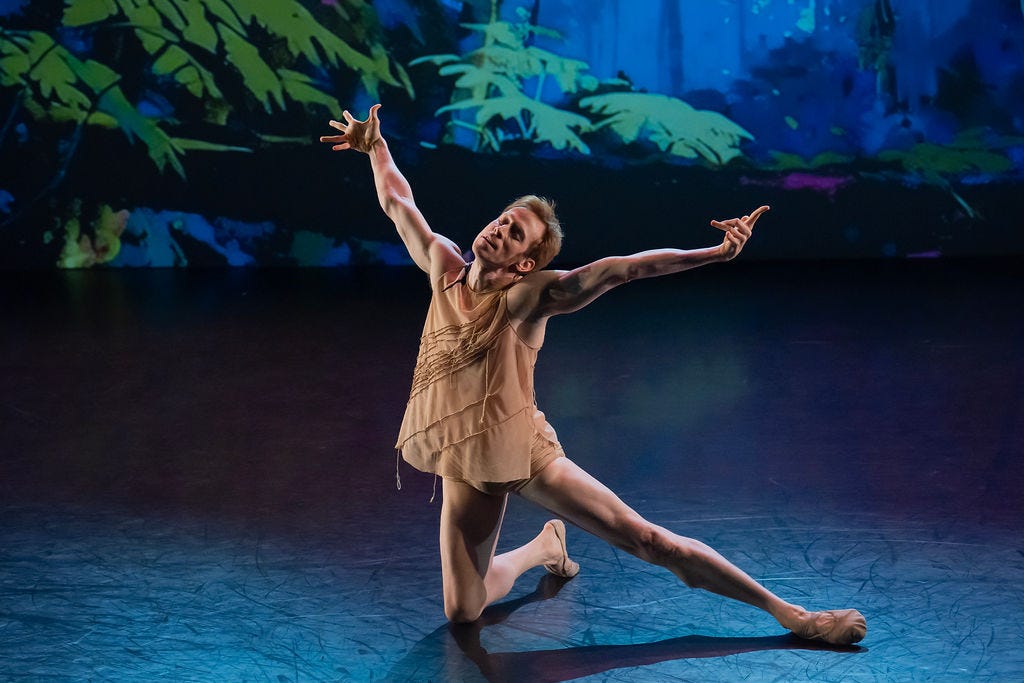
And so that emotion—I just thought, oh my god, to release this feeling and this happiness, to bring that on stage through dance, because that’s the art form that speaks loudest [to me]. A few months went by, and I thought, why is no one doing this? To give all these incredible artists one platform where they can just call me up and say, “I want to make this piece about this animal” or climate change or whatever inspires them environmentally. I will reach out to the conservation organizations and pair them up so that there’s more than just a piece about nature, so that we can add Q&A sessions and bring that information to the audience. And then if one audience member becomes a famous politician who makes a change, or a conservationist, or does anything that helps, then that’s the mission. It’s conservation awareness through dance.
It’s hard to explain to people sometimes. What about the money? How do you live? What about the profits? It’s just about the emotion, because that’s what art does, right? Because everyone sits there with tears in their eyes. They see it and they feel it, and they’re right there in the theater, and then they have the information for the World Wildlife Fund. These organizations need hundreds of millions of dollars, so it’s not about money. It’s about—let’s support one initiative, or let’s become aware. And then, as a person in your own right, you can do something.
CB: Money is essential, but in the absence of authentic caring for the issue, money isn’t enough. So you’re focused on the caring-for-the-issue part.
CG: That’s right. The conservation organizations, they buy land, they raise the funds—whatever funds we can raise, even if it’s $1 million, it’s still not enough, right? So that’s not the point. The point is just to open people’s eyes and to educate. And then bring in the children—now we have five school programs. We go into schools with choreographers and do workshops. So it’s education and awareness, really.
CB: Dance and activism can seem like strange bedfellows, because so many people feel like they don’t understand dance, or they rarely go to see performances. Why is dance effective at reaching people in this way?
CG: Dance is just so fabulous. I mean, dancers need to be excellent at everything—they need to be athletes, they need to be musical, they need to act and they need to feel it. It’s this illusion of perfection and beauty with the music, or without it. It’s just this unbelievable talent that you can’t put in words, or I can’t put it in words, because sometimes it’s so moving and touching, or just joyful and beautiful. Nature and art, they always go hand in hand. Why vildwerk. is taking off so quickly is also because the dancers all feel what we feel, they all have this inspiration. Artists are now coming to me [asking to be part of vildwerk.], which is wonderful. We have the next five years sort of planned out already.
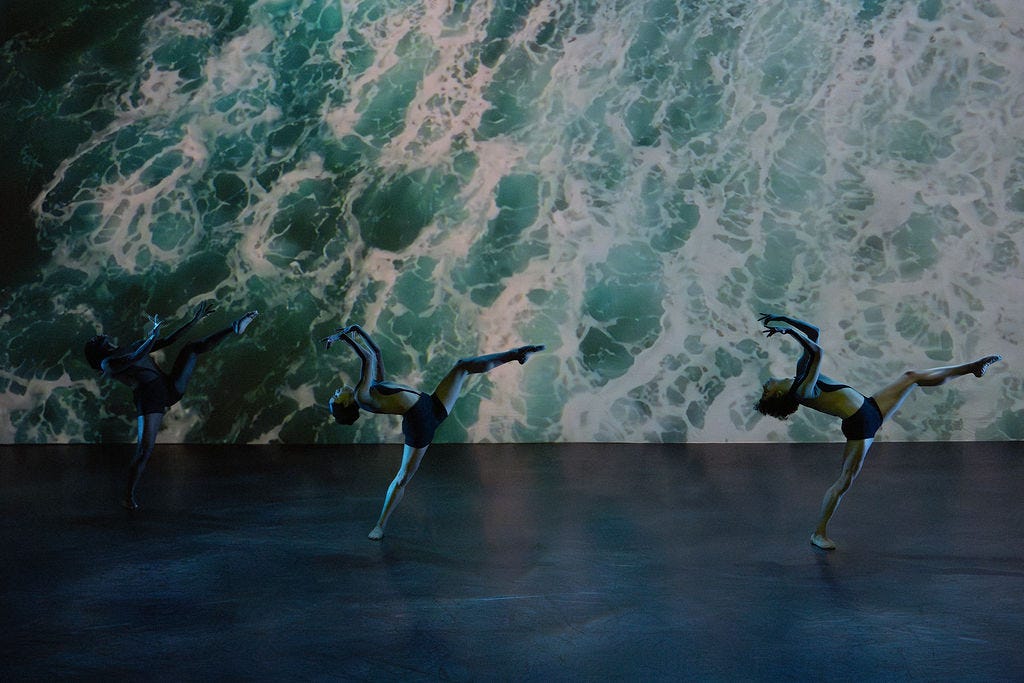
CB: You give the artists so much latitude, and everyone goes deep on the theme. In Network, Gianna Reisen’s piece from last December’s Live Arts show, the musician recorded mushroom sounds, the photographer made video and photographic projections of mushrooms, the costumes were mushroom-colored. I’ve told so many people about that piece.
CG: Gianna is making for City Center a second part, about pollination. And the Young People’s Chorus of New York City is collaborating with her, so that’s going to be wild because she doesn’t know yet, but I think there’ll be quite a few children on stage singing. The YPC is fantastic. I’m planning a trilogy with that—mushrooms, pollen, seaweeds. Maybe in a few years, [we’ll have a] Gianna Reisen evening and invite mycologists and oceanographers and pollen experts.
CB: What makes vildwerk. different is that you’re not saying, “Here’s the environmental issue, and here’s the dance.” They’re woven together. You give the artists free rein, and they come up with these abstract, inventive ideas. As a viewer, that lets you absorb the cause and the information in a way that you remember, like I did with the mushroom dance.
CG: When I started—and I can’t believe it’s only three years ago—I thought, don’t step on any artistic toes. An example is Tiffany Rea Fisher. She has EMERGE125, a contemporary dance company, and she’s from California. I came across an initiative for the rewilding of the grizzly bear to California, because it’s extinct there, and two of my friends are on the board of the California Grizzly Alliance. It’s going through the state senate, and it’s very political, and the majority of people haven’t heard of it. I said, we have to make a ballet about it and bring it to California, and so that’s what we’re doing. The choreographers like it when I suggest themes. They expand on it, and then I connect with the organizations.
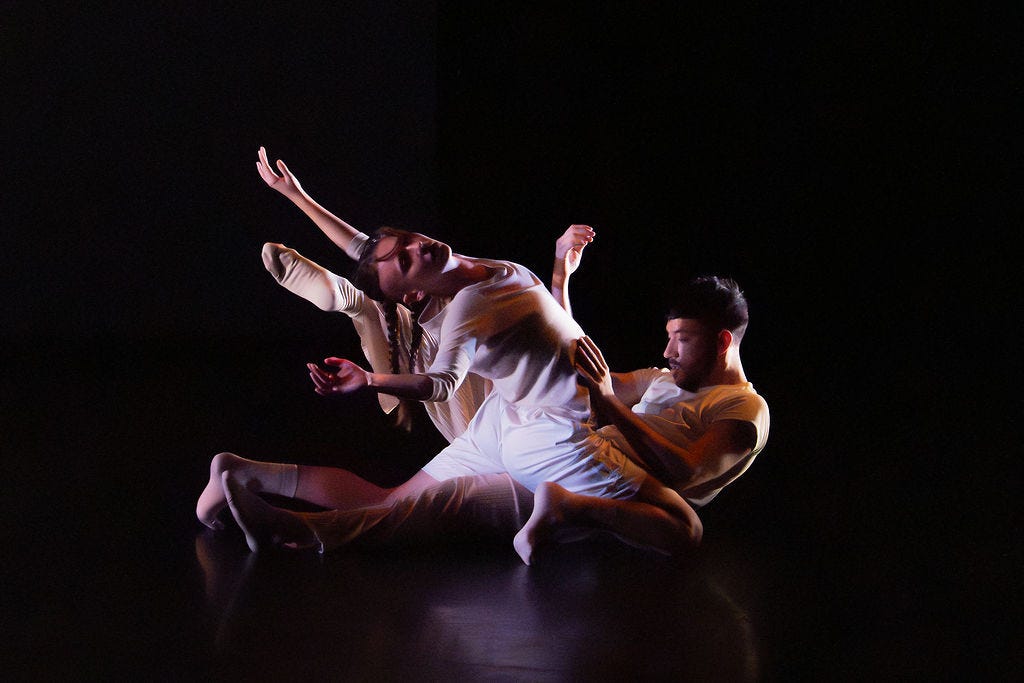
CB: And next year you’ll be at City Center—that’s a huge step.
CG: Yes, I can’t believe it myself. It happened because [City Center VP and Artistic Director of Dance] Stanford Makishi came to our first season at Museo del Barrio, and I’ve been on his case for two years. He was so generous and lovely, and he invited me to his office a few times. And then the last time I thought, you know, should I ask him, can we maybe be part of Fall for Dance or something? I said, what does it take to have an evening here? And he said, you’re doing it—why don’t we do an annual thing?
CB: Oh my god!
CG: I know. Now I’m curating the program—there’ll be three new works. Jacqulyn Buglisi is making a new piece on a book by Professor Peter Laufer, called Dreaming in Turtle. He’s a professor [of journalism] in Eugene, at the University of Oregon, and he traveled the world to report about people’s fascinations with tortoises and turtles, and how they’re being poached and sold for hundreds of thousands of dollars on the black market, like rhino horn, or kept as pets or for worship. [Jacqulyn] is making a fantasy ballet about it. Then Gianna Reisen’s pollen [piece], and the third one is a huge surprise.
CB: You’ve built an international advisory board of leaders in conservation, finance, consulting, music, and dance, and you’ve grown the organization so quickly. How have you made that happen?
CG: I really have to mention Christopher Wheeldon, because he has been an absolute angel. He’s such a good person. I’ve known him for many years from London, and I went to him three or four years ago and told him of my idea after the rewilding of the Bolson Tortoise. I said, I want to do this, will you help me? Would you be on the advisory board? Because if I can say to people that Chris is on it… He had tears in his eyes and he said, Chiara, of course I’ll support you. He was the first. I know people all around the world, businesspeople, banking people, lawyers, conservationists, dancers. All my life I just love people, and I have many friends, and so I called them up and asked, would you like to be on my advisory board?
I think you need to let people do what they’re good at. Let the legal team do that, let the financial people help, or social media. It has to be done really right, because if it’s not right, it’s wrong. It has to be at a good level, like top level, because if you work with Christopher Wheeldon, you can’t let him down, right?
At the same time, I also work with local people who I can call up and say, “Can we go to this school in New York City in a week’s time, and would you talk to them?” Which I can’t do with someone like Chris, because he’s somewhere across the globe. I worked with Annabelle Lopez Ochoa on Symbiotic Twin [for the December 2025 show], she is just unbelievable. She’s always somewhere, in Hong Kong, but you text her a question and within one minute she’s replied, day or night. The people that I surround myself with are exceptional, so it’s very easy, and I owe it to them not to fail. And I owe all these artists, because they’re so wonderful, and they give their life. I pay them, of course. They need to be paid fairly. You raise money, and the first chunk goes to the artists.
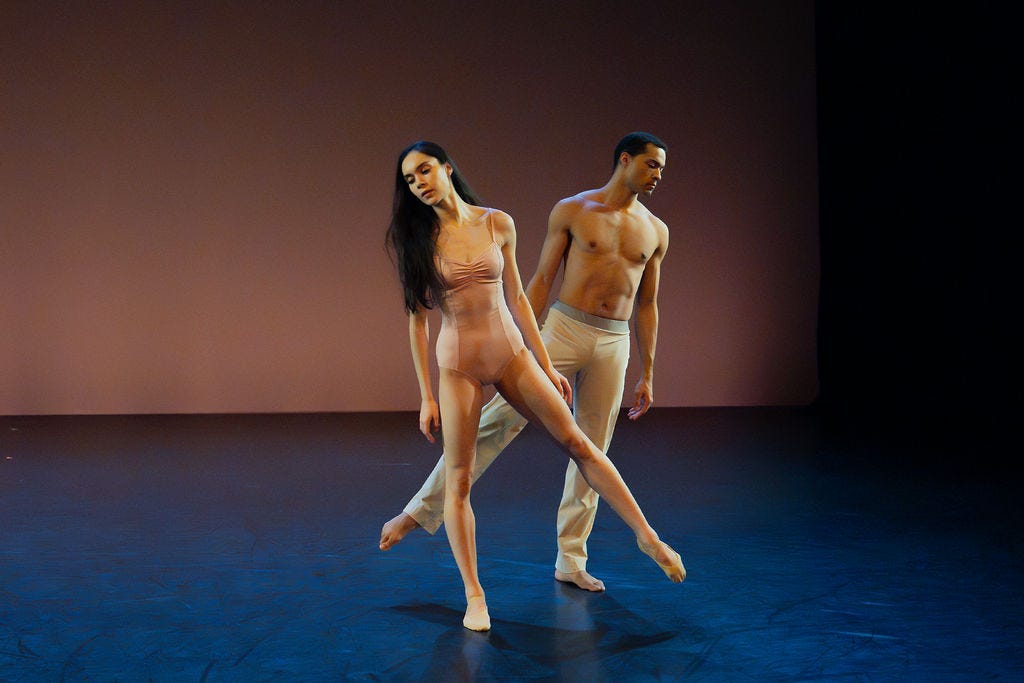
CB: You mention surrounding yourself with exceptional people. But to retain exceptional people, you also have to deliver. What do you deliver to them that makes them sticky?
CG: I think I have good ideas. I think I’m artistic enough that they trust me. I think that they believe in my heart. I think they really trust me that these are important issues that are currently happening. And I’m there—sometimes there’s drama behind the stage, and I’m trying to mediate it. [As a lawyer] I wasn’t an official mediator, but I mediated amongst clients, so that’s one of my talents. It took me 50 years to find out I can organize, and I’m good with people, and to stress-manage somehow. I think they trust me with that.
CB: You’re also cognizant of not wasting anybody’s time. You are very clear on what the priorities need to be. When I’ve been in managerial roles, my approach is that the bottom line is always me. My job is to facilitate others in doing what they do well, and everything else, I’m going to take off their plate.
CG: Yeah. I’ve learned also that when that’s not the case, when artists think they should do it themselves and not involve me enough, it’s not a good thing. It doesn’t come out as good as it could be. I’ve learned that I have to be very clear from the beginning that although you’re extremely talented in what you do, this is how it’s going to work. If no one comes to the theater, no one will know [about these issues]. So my job is to fill up the theater.
We went to the Ballet Icons Gala in February at the London Coliseum. They have a 2,500-seat theater, and it was sold out to the last seat. Ed Watson performed Antonia Franceschi’s solo Asylum, and it was a standing ovation. Just the exposure! I think you have to be generous, because a lot of artists are thinking of the copyright—“Don’t show it [anywhere else].” I want everyone to show [the work] as much as possible, because if it’s not danced, it’s dying, right? That’s what artists sometimes don’t understand. It needs to spread. So that’s the plan for the next few years, to [go to] different cities in America and internationally, but every year, once a year, in New York.
CB: I’m hearing other things in what you’re saying. One is a strong sense of leadership, which means both inspiring people and giving them freedom, but also being the bad cop. Which is not necessarily being mean, it’s saying, when it needs to be said, that XYZ needs to be done in this way in order for us to be successful. You’re also talking about continuing to build a more and more complex web of people. That’s how you started vildwerk., by leveraging a web of people that you already had. You’re thinking long-term—not just getting the next show on the stage, but what is the next step toward the next-next step.
CG: Yes, networking. I went to [Julia Wolfe’s] unEarth at David Geffen Hall [in 2023]. It was a concert with dancers and the Young People’s Chorus of New York City. It was such a big event, gorgeous. When you left, everyone got a little plant, and it was so inspirational. And then that’s the end—it’s such a shame to not follow up in [some] way. On World Wildlife Day [on March 3, 2026], Deloitte invited us in, and the Joffrey Concert Group dancers performed a three-minute excerpt. We met Prince William’s organization, and they’ll have an annual dinner there. I’d like to do something there, or go to the UN for Climate Week. Just to spread out into those circles, bring in a little bit of dance, and then maybe they’ll feel something.
CB: Basically, you’re networking.
CG: Yes. It’s all natural and organic. Suddenly I get these emails from, I don’t know, the Northern Ballet in Leeds. They emailed me to do something in Leeds. These amazing organizations contact me, and it’s very cool.
CB: You don’t seem to have any limiting thoughts about how far you can take this. You just go for it.
CG: Yes. I mean, the money side of it, of course, is the big issue. But I always think, maybe because I’m not a money person, somehow it comes and it goes—it comes and it goes quickly—but it is somewhere, right? And there are people who believe in these projects, and you just have to hustle. But that’s all arts organizations. That’s just how it works, and I’m not scared of doing that. You just have to ask the people who support it, and look for grants and look for philanthropists, and then come up with ideas for works that are interesting.
For example, the mycorrhizal fungi piece [Network]. One of our first supporters is an amazing person called John Swift, who’s in California, and he has a fund called the Mycorrhizal Fund. I didn’t even know what mycorrhizal was, so I Googled it. And then I thought, John, as a thank you, now we’re going to make a mushroom ballet. That was after he already made the donation, half a year later. I just come up with ways to connect it to what’s relevant. Yeah, it’s a whole network.
CB: It’s a rhizome!
CG: That’s right.
CB: What do you have planned for the Bryant Park performance?
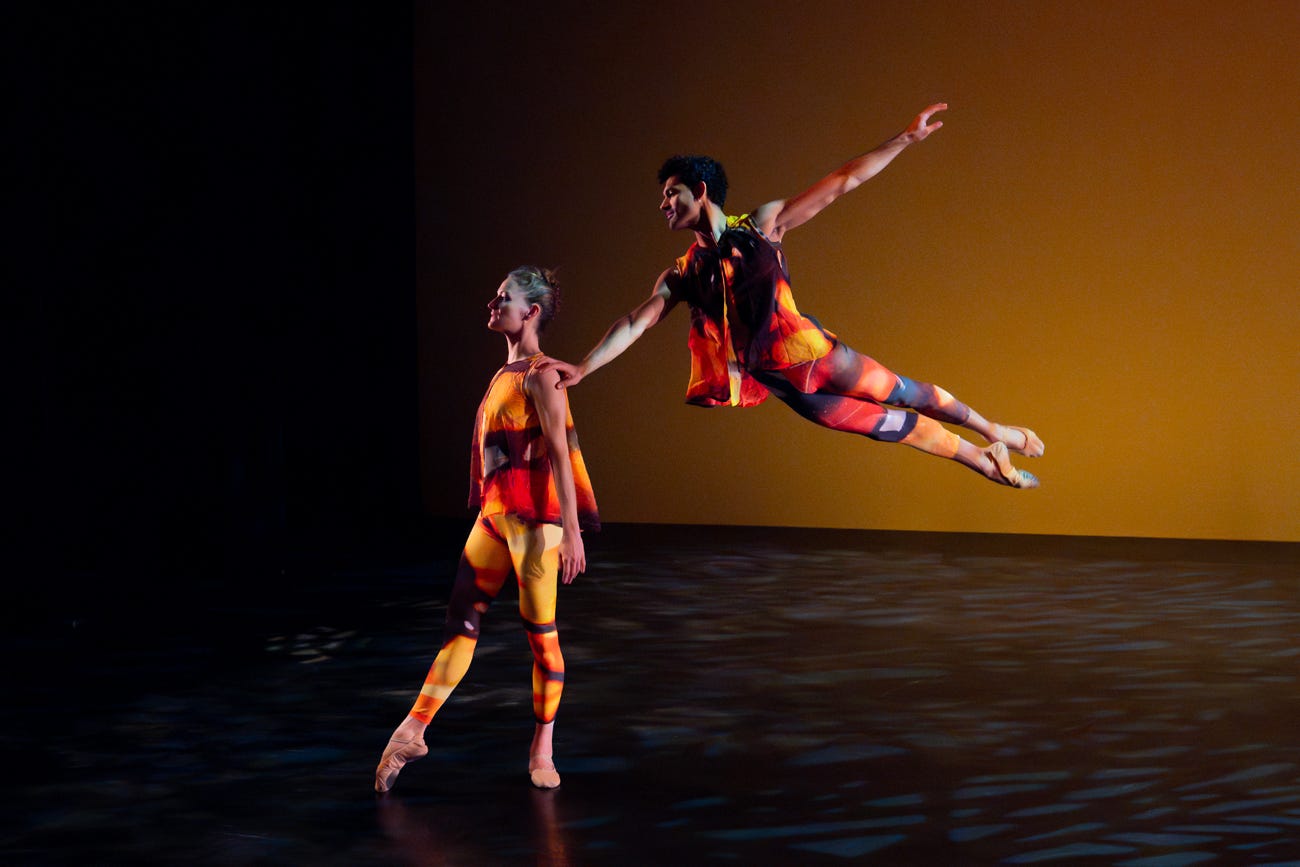
CG: Bryant Park will be a bit different. It’s a family picnic, summer stage, so it needs to be light and easy. There are no projections. There is no live music, because we had to keep to the budget. We’ll have Jackie Buglisi’s Moss Anthology #5 again, which is beautiful. Then we’ll have a new work by Bradley Shelver with the Joffrey Concert Group about black panthers, called Fists and Feathers, and his piece When the Water Breaks. Ingrid Silva’s Intersections of Life with a few Dance Theater of Harlem dancers and a few freelance people; it’s beautiful. Then we’ll have [Henning Rübsam’s] Monarcas, which is about the monarch butterflies. That was a pas de deux at Live Arts last year, and now it’s on 10 dancers. Then a new piece by Antonia Franceschi called Six Breaths, with Alexa Maxwell and Victor Abreu [of New York City Ballet]. That’s about the rewilding of the jaguar and creating migration corridors. The music is gorgeous and the dancers are amazing. The program will be very charming and easy and happy, and we’ll have a little reception with lemonade and strawberries.
CB: What do you hope people will take away from a vildwerk. show, whether it’s in the park or at City Center or in Leeds?
CG: I hope that they’ll be inspired to look up some of the organizations that we collaborate with, or find another organization that they love, or change their behavior, or do something, especially if it’s local. Helping turtles cross the street in the Hamptons and upstate, or rewilding an injured animal, not use straws, turn off the lights, turn off the water, things like that.
CB: So you want them to start becoming part of the web.
CG: Yeah, and once you start doing it, it just grows.
For more information on the Bryant Park Picnic Performance, visit the NYC Parks website.